The best time to visit the Great Smoky Mountains
The best time to visit the Great Smoky Mountains is spring and fall. Read on for the best weather, crowds, and events, plus when to hike and save.
When to go to the Great Smoky Mountains for the best weather, crowds and events?
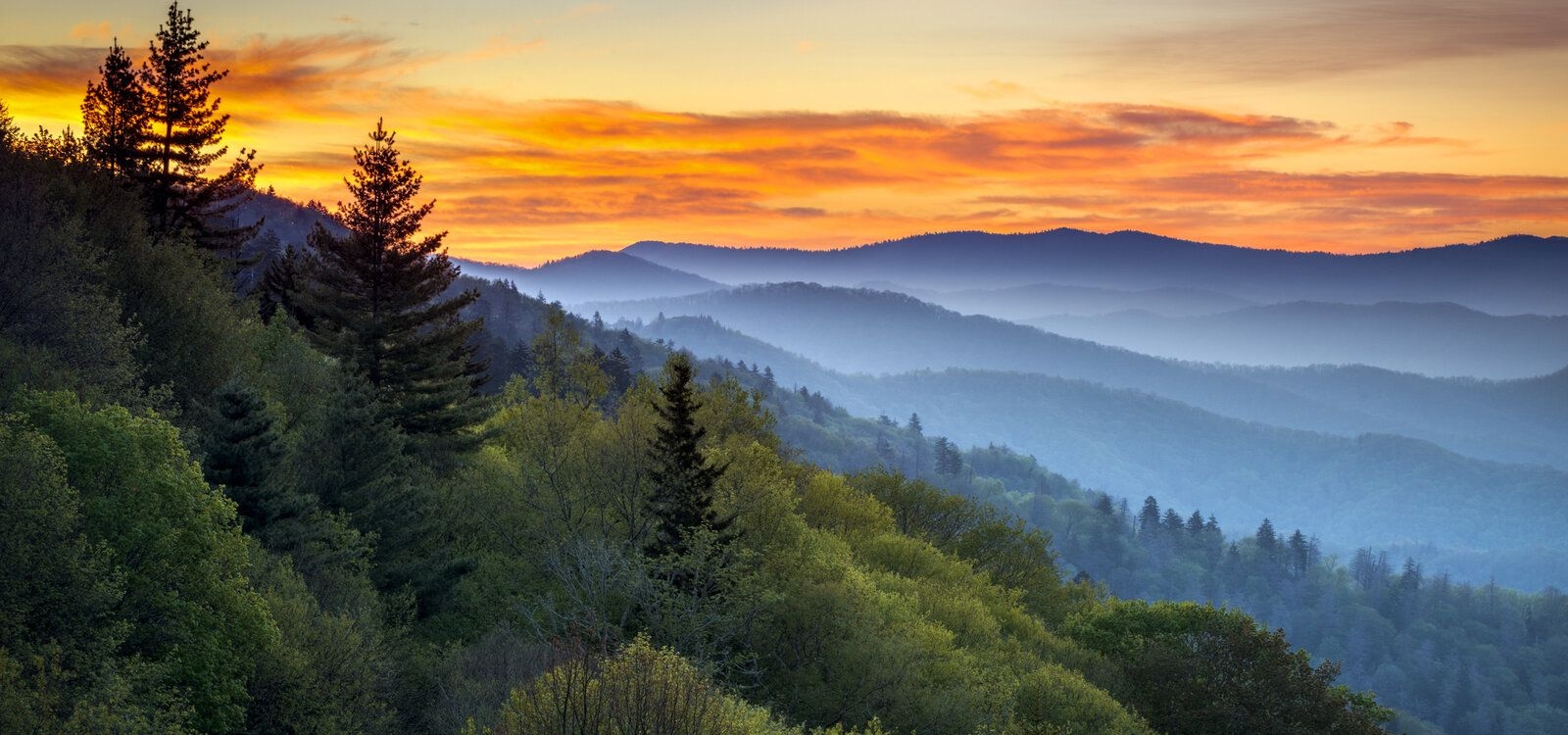
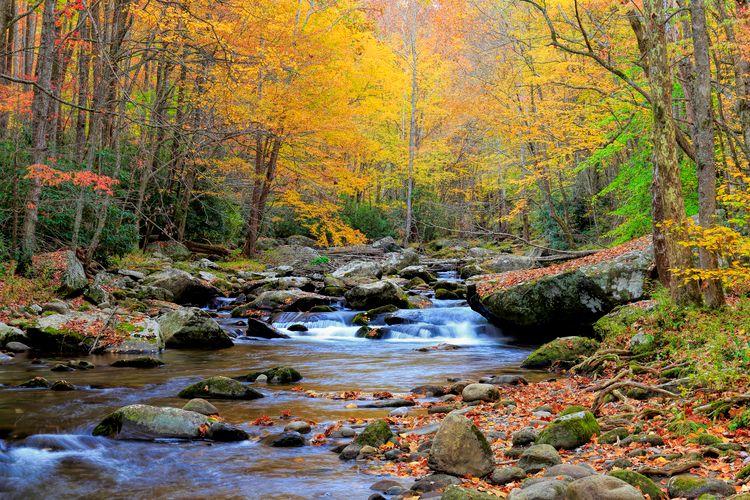
The best time to visit the Great Smoky Mountains is usually April through May and September through October, when the weather is milder, the scenery is at its best, and the park’s trails, overlooks, and nearby mountain towns are easier to enjoy than in peak summer. These months suit most travelers, whether you want a hiking-led trip, a scenic cabin stay, or a family break split between the national park and nearby attractions in Pigeon Forge, Gatlinburg, and Sevierville. Spring is especially strong for wildflowers and waterfalls, while fall is best for foliage, harvest events, and cooler walking weather.
If you are looking for the cheapest time to visit the Great Smoky Mountains for best cabin rental rates and fewer crowds, then January, February, and parts of August are the best months to visit. Some travelers may prefer to avoid July and October: July because of heat, humidity, and storms, and October because it is the park’s busiest month of the year during fall color season.
In this guide, we’ll cover:
- The best time to visit the Great Smoky Mountains for different travel styles
- Answer common FAQs
- Explain the differences between the main destinations
- Share a month-by-month guide to help you choose the right time to go.
Popular Cabin Rentals


A quick guide to the best months to visit the Great Smoky Mountains
What are the best months to visit the Great Smoky Mountains overall?
For most travelers, the best months to visit the Great Smoky Mountains are April, May, September, and October. These months usually offer the best balance of comfortable temperatures, scenic trails, and strong seasonal atmosphere.
When is the best time to visit the Great Smoky Mountains for hiking?
The best time to visit the Great Smoky Mountains for hiking is usually April to June and September to October, when temperatures are more manageable and the scenery is especially rewarding, from spring wildflowers to fall color.
When is the best time to visit the Great Smoky Mountains for wildflowers?
For wildflowers, April is usually the standout month, though blooms begin earlier and continue later depending on elevation. The park is sometimes called “Wildflower National Park,” and Gatlinburg’s Spring Wildflower Pilgrimage is one of the best-known spring events in the region.
When is the best time to visit the Great Smoky Mountains for fall foliage?
For fall foliage, mid-October to early November is usually best at lower and mid elevations, while color begins earlier at higher elevations. October is also the park’s busiest month, so it is worth planning ahead.
What is the cheapest time to visit the Great Smoky Mountains?
For better value cabin rental rates, look at January, February, and August, when demand is often lower than in spring flower season and peak fall weekends.
What is the least busy time to visit the Great Smoky Mountains?
January is usually one of the quietest times to visit the Smokies, while August can also feel less crowded on trails and in nearby towns because of the heat.
What are the best Smoky Mountains events by season?
In winter, look out for Pigeon Forge Winterfest and Gatlinburg Winter Magic. In spring, the biggest draw is the Spring Wildflower Pilgrimage in April. In late spring, the park’s famous synchronous fireflies appear around late May to early June. In summer, Gatlinburg’s 4th of July Midnight Parade and other holiday events stand out. In fall, Smoky Mountain Harvest Fest and Dollywood’s Harvest Festival are major highlights.
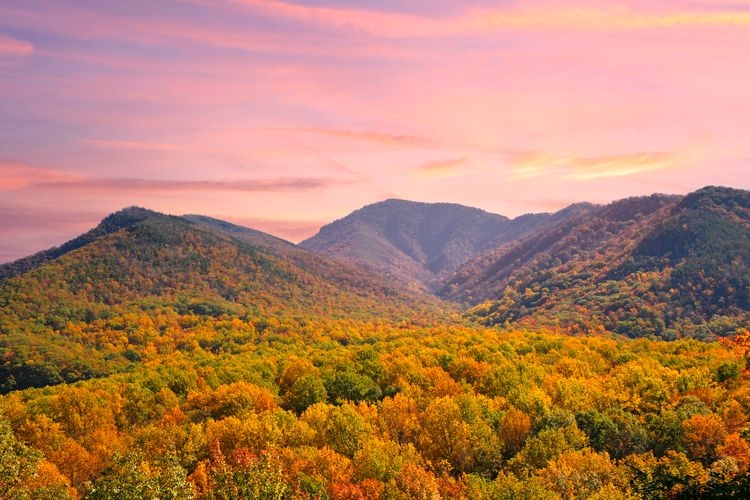
The best time to visit the Great Smoky Mountains: a month-by-month guide
From winter cabin stays and holiday lights to spring wildflowers, summer family trips, and peak fall foliage, the best time to visit the Great Smoky Mountains depends on what you want to do. This guide uses Gatlinburg as a practical climate reference for the Tennessee side of the Smokies, including Pigeon Forge, Sevierville, and nearby mountain stays.
Great Smoky Mountains in January
January is one of the quietest months to visit the Smokies, making it a good time for scenic drives, cozy cabin stays, and slower-paced trips built around mountain views, indoor attractions, and winter walks. In nearby Pigeon Forge, Winterfest is still running, while Gatlinburg Winter Magic keeps the area festive with large holiday light displays.
Weather in the Great Smoky Mountains in January
Cold, crisp, and often quiet, with the chance of snow and strong conditions for indoor attractions and winter scenery. Average temperature: -2–8°C (29–47°F) | Chance of average rainfall: Moderate.
Great Smoky Mountains in February
February stays calm and works well for quieter cabin trips, scenic viewpoints, and easier access to museums, shows, and restaurants in the gateway towns. Winterfest celebrations usually continue through much of the month, which helps keep Pigeon Forge and Gatlinburg lively even in the colder season.
Weather in the Great Smoky Mountains in February
Cold but slightly milder than January, with crisp mountain air and manageable sightseeing weather. Average temperature: -1–11°C (31–51°F) | Chance of average rainfall: Moderate.

Great Smoky Mountains in March
March marks the start of spring in the Smokies, with longer days, rising temperatures, and the first signs of wildflowers and greener scenery. It is a strong month for scenic walks, waterfalls, and road trips before the busiest spring weeks arrive, though spring-break demand can lift visitor numbers around the gateway towns.
Weather in the Great Smoky Mountains in March
Cool and changeable, but noticeably warmer with early spring conditions returning. Average temperature: 3–15°C (38–59°F) | Chance of average rainfall: Moderate.
Great Smoky Mountains in April
April is one of the best times to visit the Great Smoky Mountains. Wildflowers are a major draw, temperatures are comfortable for hiking, and the region feels fully back in spring mode. The biggest seasonal event is the Spring Wildflower Pilgrimage, a multi-day celebration of wildflowers, nature walks, and photography based around the park and Gatlinburg.
Weather in the Great Smoky Mountains in April
Mild, comfortable, and ideal for hiking, waterfalls, and scenic drives. Average temperature: 7–20°C (45–68°F) | Chance of average rainfall: Moderate.
Great Smoky Mountains in May
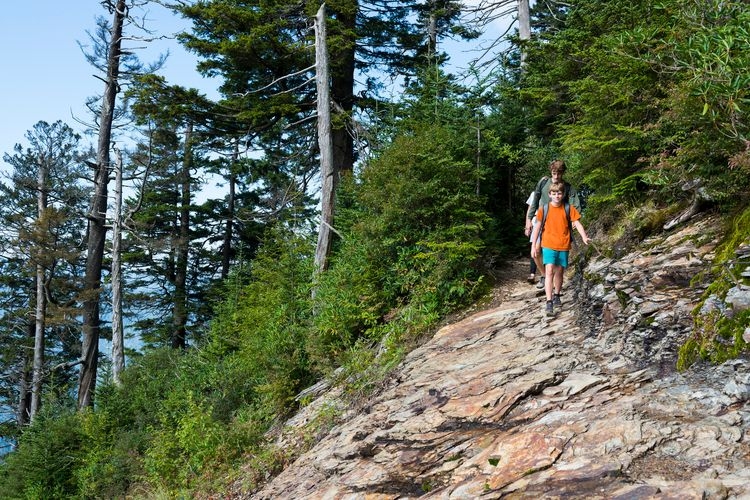
May is one of the strongest months in the calendar and one of the best months to visit the Great Smoky Mountains overall. Trails are greener, waterfalls remain lively, and it is one of the best periods for longer hikes and mixed park-and-town itineraries. Late May also brings the start of the park’s famous synchronous firefly season at Elkmont.
Weather in the Great Smoky Mountains in May
Warm, bright, and very good for longer hiking days and cabin-based trips. Average temperature: 12–24°C (54–75°F) | Chance of average rainfall: Moderate.
Great Smoky Mountains in June
June brings early summer warmth and long days, making it a strong month for families and outdoor travelers. Ranger-led activities are offered consistently between June and October, and late May into early June is also when visitors gather at Elkmont for the synchronous fireflies viewing period.
Weather in the Great Smoky Mountains in June
Warm to hot, with greener landscapes and a growing chance of afternoon showers. Average temperature: 17–28°C (62–82°F) | Chance of average rainfall: High.
Great Smoky Mountains in July
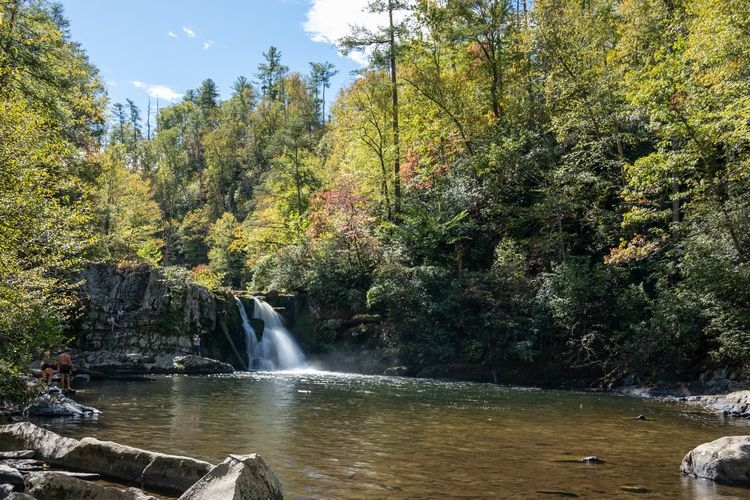
July is peak summer in the Smokies and best for travelers who want long days, family attractions, and classic warm-weather cabin trips. It is a strong month for making the most of the best things to do in Gatlinburg - combining national park time with Pigeon Forge entertainment and Gatlinburg’s 4th of July Midnight Parade and holiday celebrations.
Weather in the Great Smoky Mountains in July
Hot and humid, with frequent summer storms and lush mountain scenery. Average temperature: 18–29°C (65–84°F) | Chance of average rainfall: High.
Great Smoky Mountains in August
August stays hot and humid, but it can still work well for travelers focused on scenic drives, shorter hikes, indoor attractions, and cabin time rather than full-day trekking. It is a good month for families who want a summer mountain trip, though earlier starts help with heat and afternoon showers.
Weather in the Great Smoky Mountains in August
Very warm and humid, with long bright days and regular storm chances. Average temperature: 18–29°C (64–84°F) | Chance of average rainfall: High.
Great Smoky Mountains in September
September is one of the smartest shoulder-season months to visit the Smokies. Summer crowds begin to ease, temperatures slowly improve, and the region starts shifting toward harvest season. In Sevierville, Smoky Mountain Harvest Fest begins in late September, while the first fall colors start appearing at higher elevations.
Weather in the Great Smoky Mountains in September
Warm and easier to manage than midsummer, with early signs of fall later in the month. Average temperature: 14–26°C (57–79°F) | Chance of average rainfall: Moderate.
Great Smoky Mountains in October
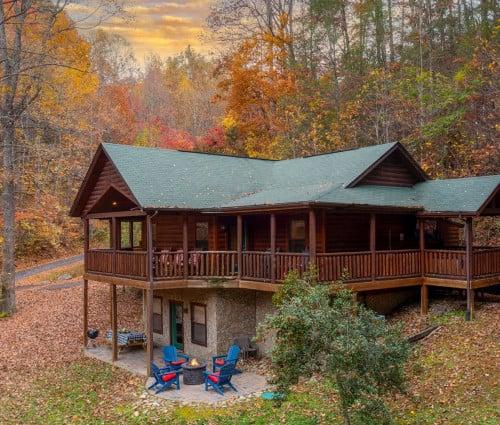
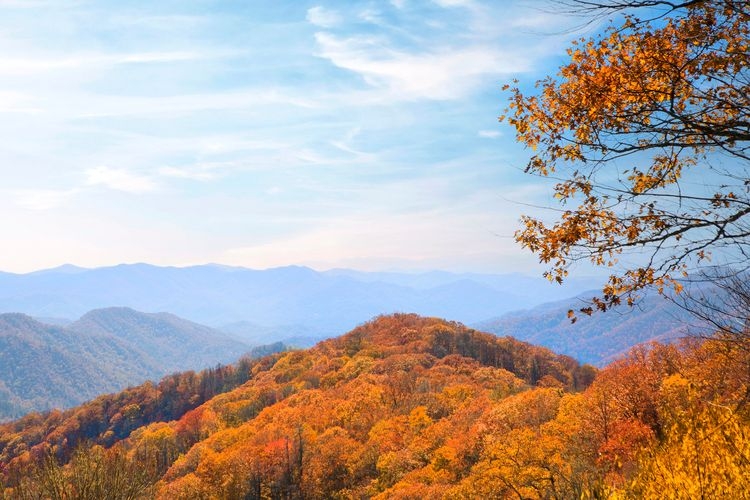
October is one of the most spectacular months in the Smokies, with vivid fall color spreading through the mountains and valley towns. It is also the park’s busiest month, so it is best for travelers who want peak scenery and do not mind heavier traffic. Seasonal highlights include Smoky Mountain Harvest Fest and Dollywood’s Harvest Festival, while fall color at lower and mid elevations is usually strongest from mid-October to early November.
Weather in the Great Smoky Mountains in October
Cooler, crisp, and excellent for scenic drives, hikes, and fall weekends. Average temperature: 8–21°C (46–69°F) | Chance of average rainfall: Moderate.
Great Smoky Mountains in November
November is a great transition month, with lighter crowds after peak foliage and a calmer mountain atmosphere before the holiday season ramps up. Early November can still bring strong lower-elevation color, and both Pigeon Forge Winterfest and Gatlinburg Winter Magic begin in early November, shifting the region into festive mode.
Weather in the Great Smoky Mountains in November
Cool and quieter, with late fall scenery and the first real hints of winter. Average temperature: 3–14°C (37–58°F) | Chance of average rainfall: Moderate.
Great Smoky Mountains in December
December turns the Smokies into one of the South’s most atmospheric winter mountain breaks. Holiday lights, festive attractions, and cozy cabin stays make it a strong month for families and couples, while snow is more likely at higher elevations inside the park. Winterfest and Winter Magic are both major reasons to visit in December.
Weather in the Great Smoky Mountains in December
Cold and festive, with short days, mountain views, and the chance of winter weather at higher elevations. Average temperature: -1–10°C (31–50°F) | Chance of average rainfall: Moderate.
Where to stay in the Great Smoky Mountains
Best for family attractions and entertainment
Pigeon Forge is best if you want family attractions, dinner shows, seasonal festivals, and easy access to Dollywood, alongside a Smoky Mountains trip. It suits travelers who want to split national-park scenery with bigger entertainment options.
Best for first-time visitors and walkable mountain-town atmosphere
Gatlinburg is arguably the best base for first-time visitors. You'll be perfectly placed for fast access to the national park, the buzzing downtown and seasonal events, with easy walking too between attractions, restaurants, and mountain-view stops. It works especially well for shorter Smokies trips.
Best for cabin stays, space, and all-round access
Sevierville works especially well if you want a larger cabin base with easier access to the wider Smokies region, from Pigeon Forge attractions to mountain roads and scenic day trips. It is a strong choice for families and longer stays.
Best for quieter nature-focused stays
Cosby is best if you want a quieter side of the Smokies with a more peaceful atmosphere and easier access to lesser-traveled parts of the park. Cosby offers a moderate climate, with mild winters and hot, humid summers, making it a good option for year-round vacations in the great outdoors.

About our Great Smoky Mountains vacation rentals
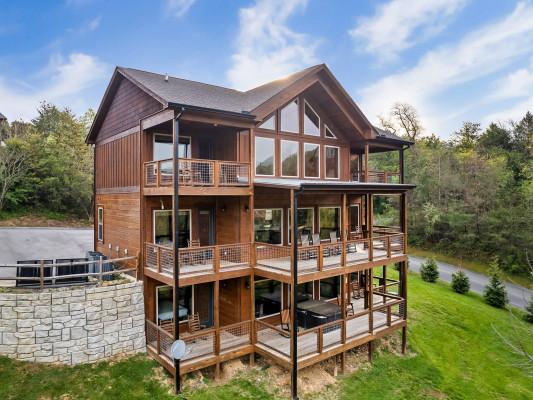
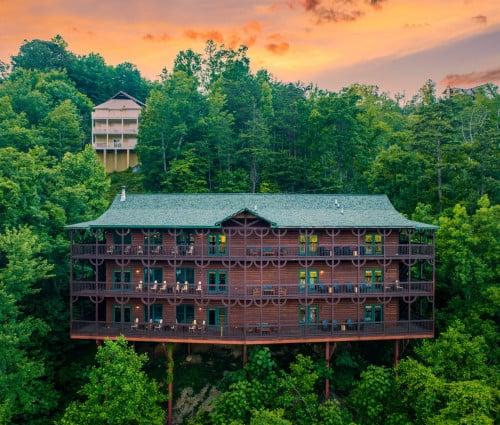
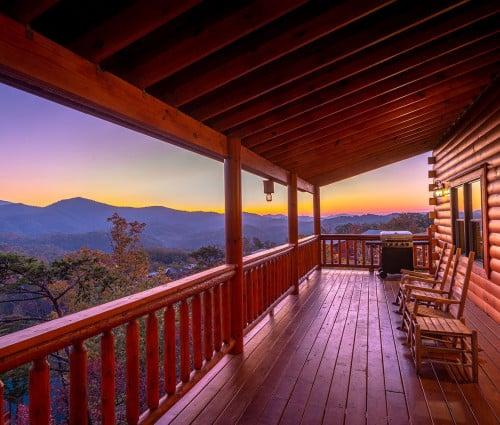
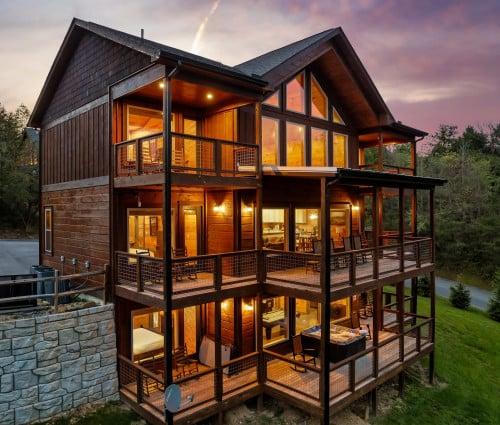
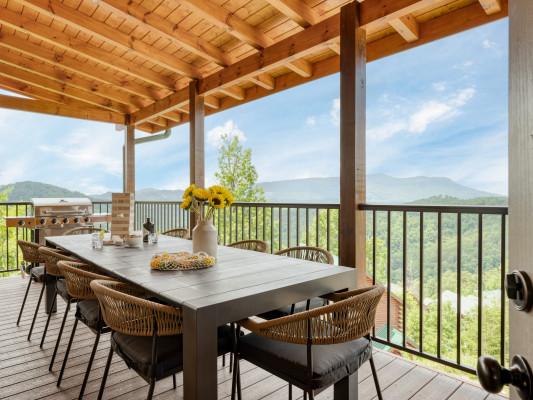
Our Great Smoky Mountains vacation rentals are the perfect options for those seeking a spacious and comfortable base for a cabin trip, a family mountain vacation, or extended stay built around hiking, scenic drives, and nearby town attractions.
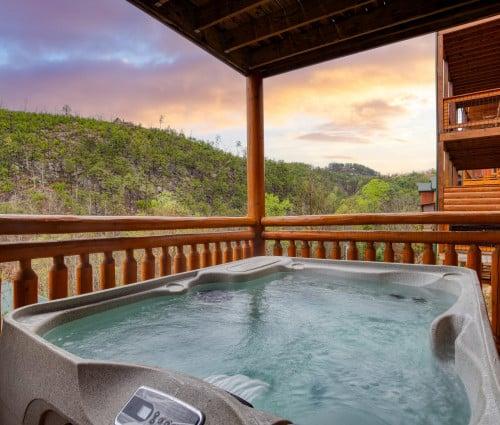
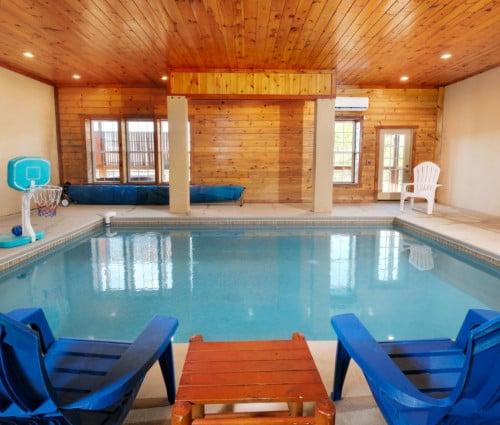
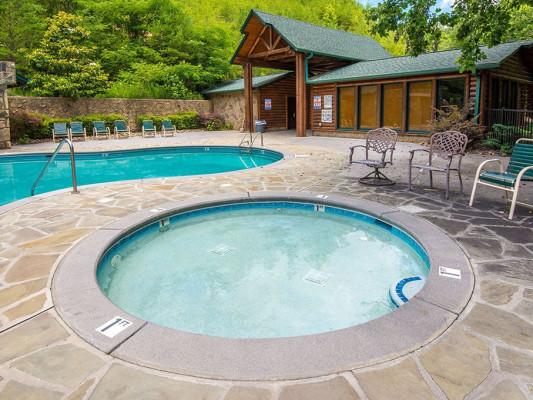
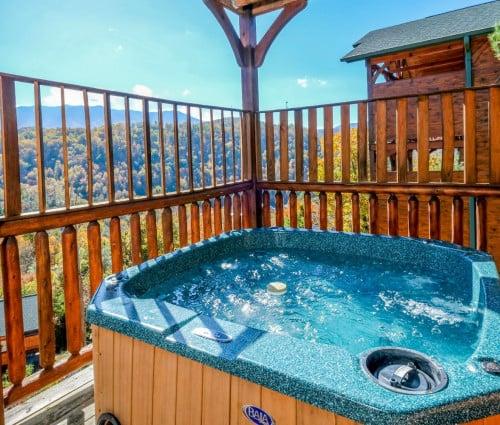
Our Smokies destinations - Sevierville, Pigeon Forge, and Gatlinburg are perfectly placed for quiet nature stays with family and friends. Packed with private all-weather games' rooms, home theaters, pools, firepits, scenic lanais and more, experience the very best of the Great Smoky Mountains, with Top Villas!
Popular Great Smoky Mountains Cabins