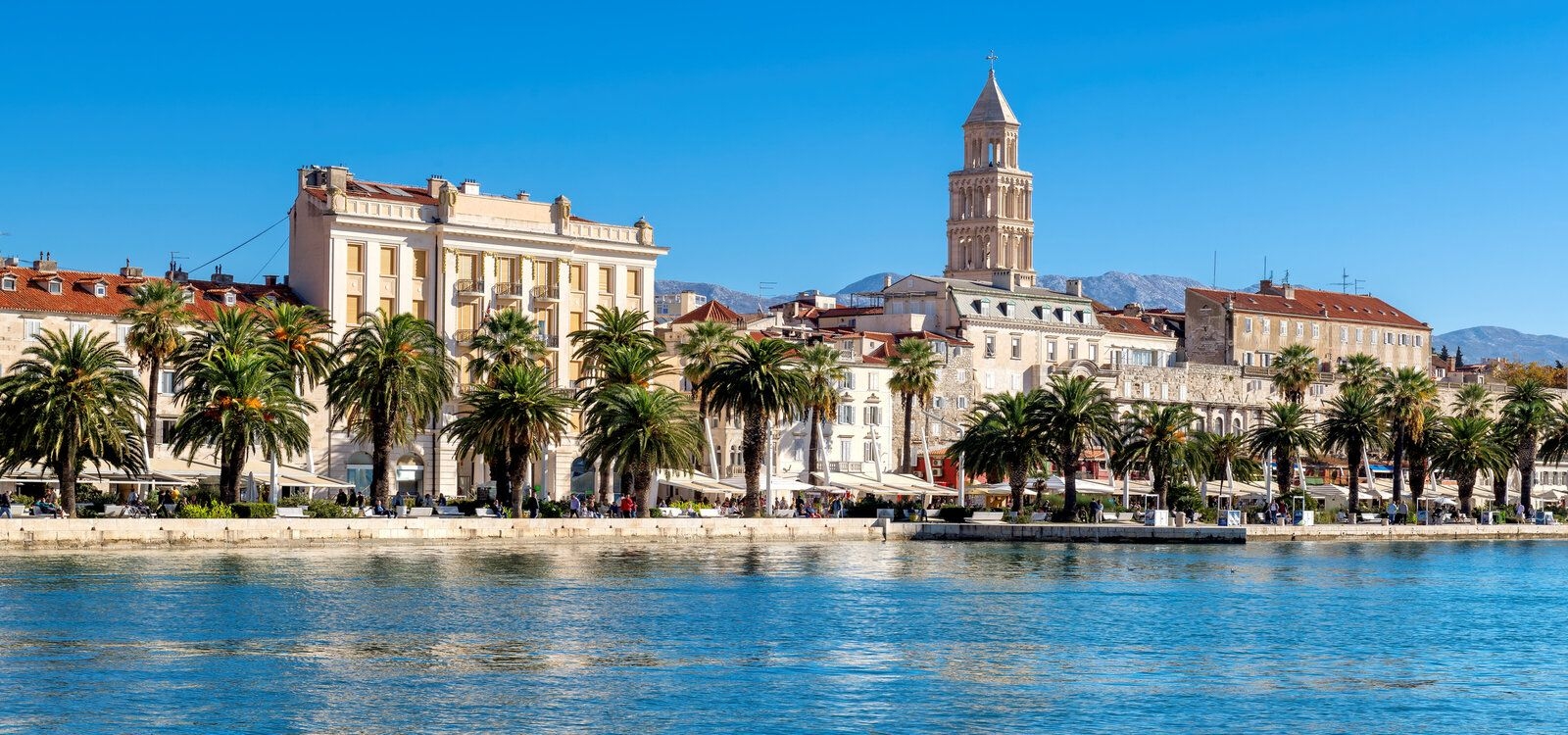
30 Things to do in Split
Discover 30 top things to do in Split, from Diocletian’s Palace and Marjan to beaches, island trips, sailing, food and historic day trips.
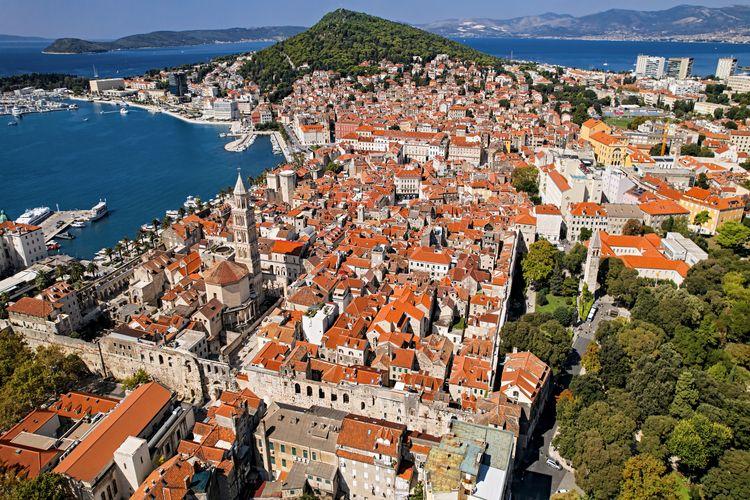
Discover the best of Split, Croatia
Split brings together more than 1,700 years of history, Adriatic beaches, Mediterranean food and easy island-hopping on Croatia’s Central Dalmatian coast. At its heart is Diocletian’s Palace, a UNESCO-listed Roman complex that has evolved into a living Old Town filled with homes, cafés, restaurants and shops rather than remaining a conventional historic monument.
You can spend the morning exploring Roman cellars and medieval streets, stop for coffee on the palm-lined Riva, swim at Bačvice or Kašjuni and finish your day watching the light change across the harbour. Stay longer and Split also becomes an excellent base for visiting Hvar, Brač, Šolta, Trogir, Krka National Park, Omiš and the ancient ruins of Salona.
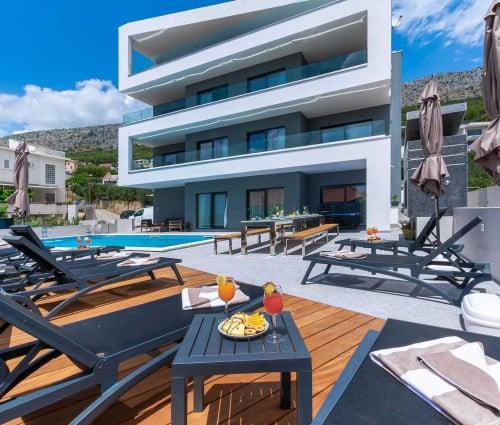
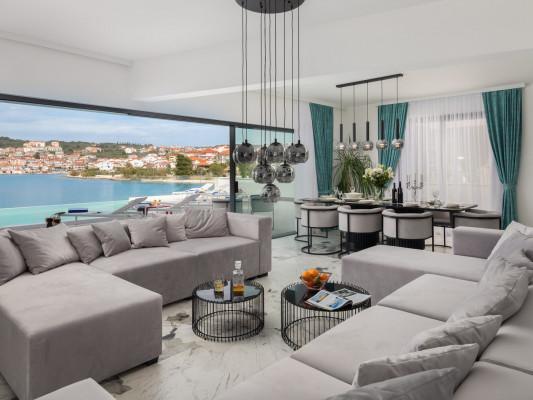
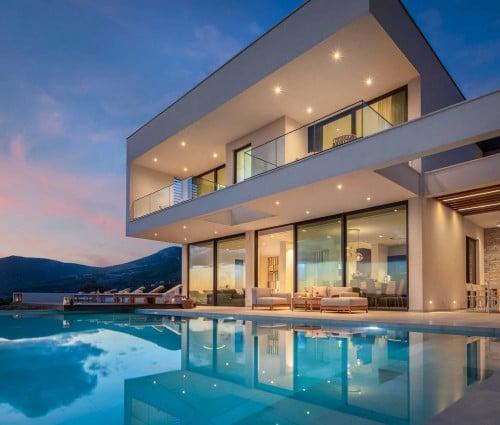
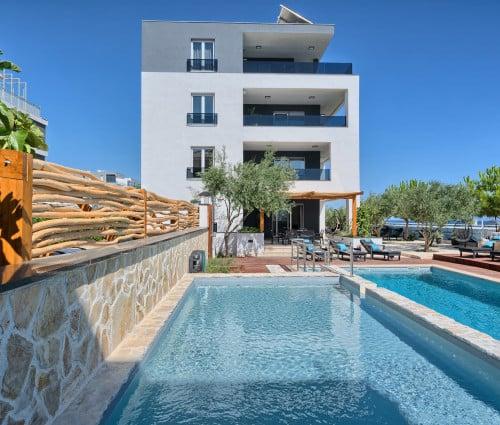
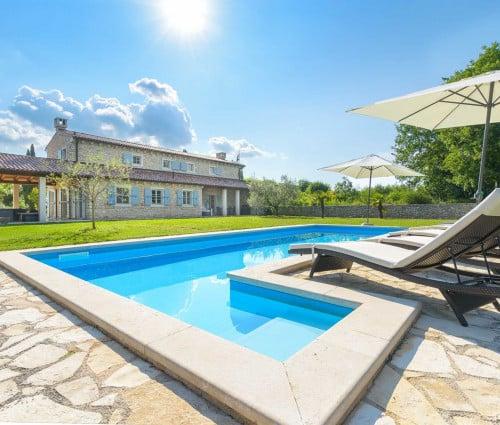
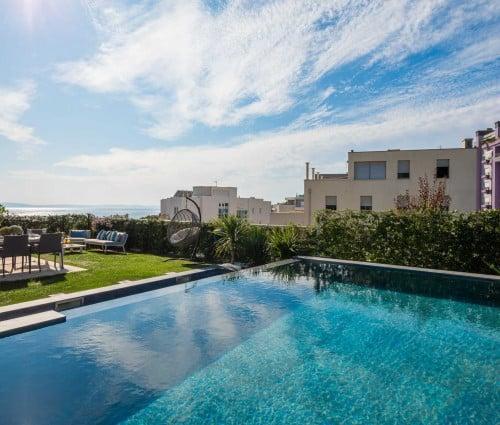
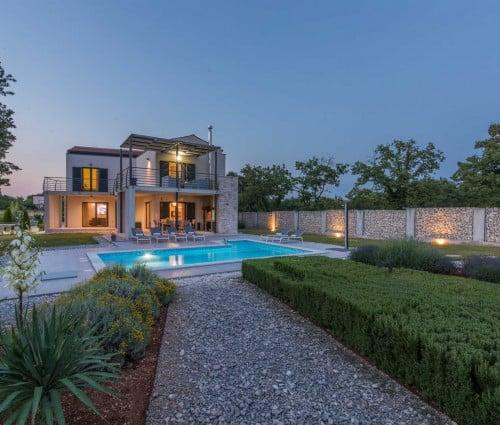
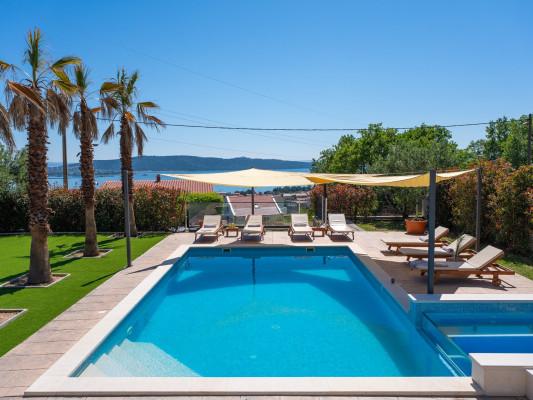
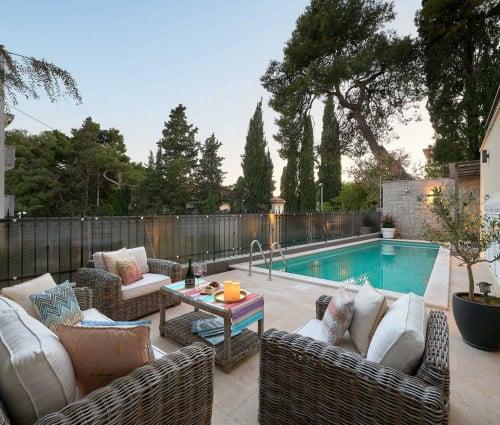
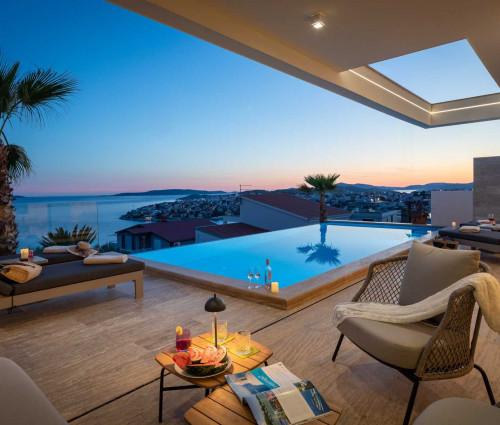
Our Split villas place couples, families and groups close to the best of the city and surrounding Split Riviera. Our collection includes exclusive pool villas and apartments with pool access, sea views, sun terraces, alfresco dining areas, BBQs and stylish interiors, designed for relaxed and effortless living.
Historic & Cultural Things to Do in Split
1. Explore Diocletian’s Palace
Location / Neighborhood: Split Old Town Best For: First-time visitors, history, families, architecture Estimated Time Needed: 2–4 hours Cost / Entry: Free to explore; individual attractions charge admission
Start at the heart of Split with Diocletian’s Palace, the vast Roman complex around which the modern city grew. Built around the turn of the 4th century for Emperor Diocletian, the palace and surrounding historic centre have been recognised as a UNESCO World Heritage Site since 1979.
Rather than finding a sealed archaeological site, you’ll discover narrow lanes filled with homes, restaurants, shops, churches and courtyards woven through Roman walls. Look for the Golden, Silver, Iron and Bronze Gates as you explore. Insider tip: visit early in the morning before tour groups arrive, then return after dark when the stone lanes and courtyards take on a completely different atmosphere.
2. Explore the Palace Substructures
Location / Neighborhood: Beneath Diocletian’s Palace Best For: History, architecture, families, Game of Thrones fans Estimated Time Needed: 1–1.5 hours Cost / Entry: €€; admission applies to the main halls
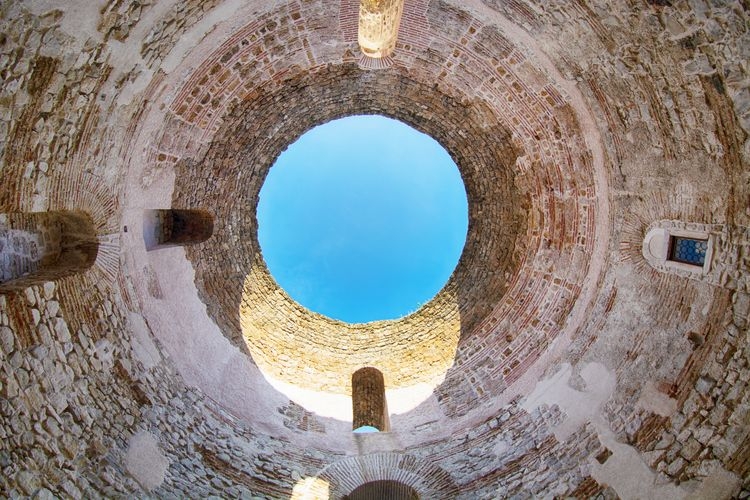
Descend beneath Diocletian’s Palace into the remarkably preserved Palace Substructures, sometimes referred to as the cellars. Their layout mirrors sections of the emperor’s former apartments above, helping archaeologists understand how the original palace was arranged.
Over the centuries, the underground chambers have served many purposes, while today they form one of Split’s most important archaeological attractions and have also appeared as filming locations in Game of Thrones. Insider tip: enter from the Riva through the Bronze Gate and emerge near the Peristyle for a particularly atmospheric route through the palace.
3. Stand in the Peristyle and visit the Temple of Jupiter
Location / Neighborhood: Diocletian’s Palace Best For: History, architecture, couples, photography Estimated Time Needed: 1–2 hours Cost / Entry: Peristyle free; temple admission may apply
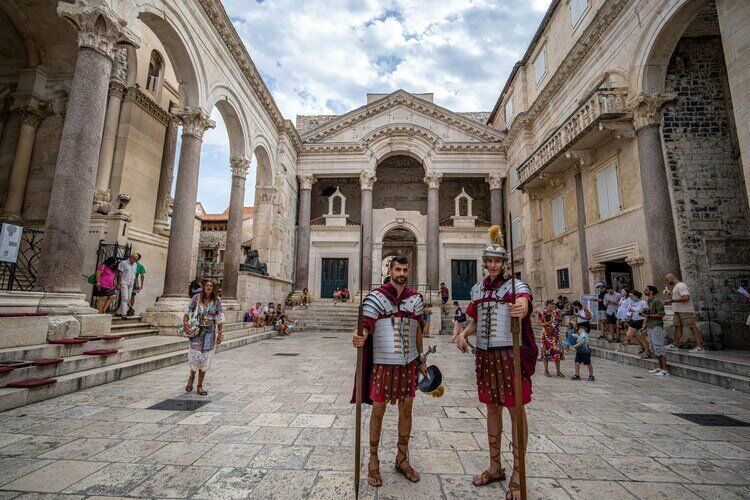
Pause in the Peristyle, the ceremonial courtyard at the centre of Diocletian’s Palace and one of the finest surviving pieces of Roman architecture in Split. Tall stone columns frame the square, while an ancient Egyptian sphinx adds another layer to its extraordinary history.
Nearby, the small Temple of Jupiter once formed part of Diocletian’s religious complex before later becoming a Christian baptistery. Insider tip: return to the Peristyle during the evening, when the surrounding architecture is illuminated and the square becomes one of the most atmospheric places in the Old Town.
4. Climb the Bell Tower of Saint Domnius
Location / Neighborhood: Diocletian’s Palace Best For: Couples, photographers, history, city views Estimated Time Needed: 1–2 hours Cost / Entry: €€; ticket required
Climb above Split’s terracotta rooftops from the Bell Tower of the Cathedral of Saint Domnius, which rises around 57 metres above the historic centre. From the upper levels, views stretch across Diocletian’s Palace, the harbour, Marjan Hill and the nearby islands.
The cathedral itself occupies what was originally Emperor Diocletian’s mausoleum, creating an unusual link between Roman imperial history and centuries of Christian worship. Insider tip: the climb involves steep, open stairways, so allow other visitors to pass and avoid the busiest middle part of the day if you prefer a less crowded ascent.
5. Stroll along the Riva
Location / Neighborhood: Split Waterfront Best For: Couples, families, dining, people-watching Estimated Time Needed: 1–2 hours Cost / Entry: Free
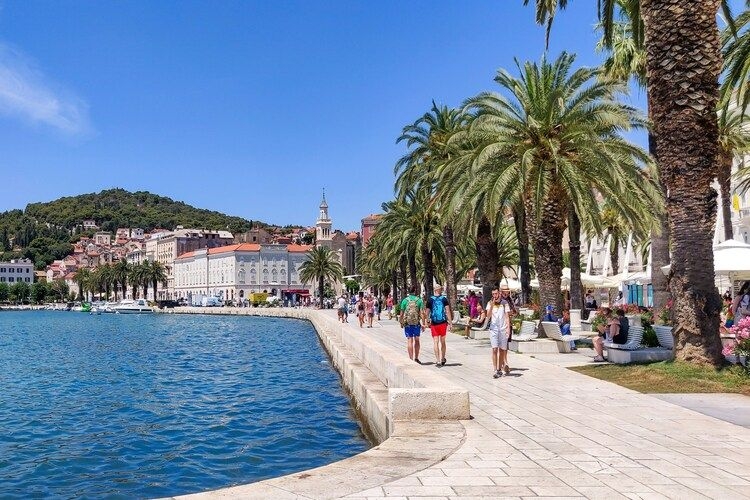
Join locals on the Riva, Split’s palm-lined waterfront promenade running directly in front of Diocletian’s Palace. Cafés and restaurants spill onto the broad pedestrian area while ferries, sailing boats and yachts move through the harbour beyond.
It is less a conventional attraction than part of everyday Split life, particularly during the ritual of lingering over coffee and watching the city pass by. Insider tip: walk the Riva once during the morning and again around sunset — the atmosphere changes considerably once the heat fades and the waterfront begins filling for the evening.
6. Browse Pazar and the Fish Market
Location / Neighborhood: Old Town Best For: Food lovers, families, local culture Estimated Time Needed: 1–2 hours Cost / Entry: Free to browse
See a more everyday side of Split at its two traditional markets. Pazar, the Green Market beside the eastern wall of Diocletian’s Palace, fills with fruit, vegetables, flowers and local products, while the century-old Peškarija Fish Market displays the morning’s Adriatic catch.
Both remain important parts of local life rather than being created solely for visitors. Insider tip: go during the morning while the stalls are at their busiest, then stop for lunch nearby and look for dishes using ingredients you have just seen at the markets.
7. Wander through Matejuška and Veli Varoš
Location / Neighborhood: West of the Riva Best For: Couples, photographers, local neighborhoods Estimated Time Needed: 1–2 hours Cost / Entry: Free
Walk west from the Riva to Matejuška, Split’s historic fishermen’s harbour, where small boats sit beneath stone houses and Marjan rises behind the waterfront. From here, continue uphill into Veli Varoš, one of the city’s oldest residential neighbourhoods.
Narrow lanes, stone houses and small churches reveal a quieter side of historic Split beyond Diocletian’s Palace. Insider tip: follow these streets on your way towards Marjan rather than treating the neighbourhood as a separate attraction — the gradual transition from waterfront to old residential lanes is part of the experience.
8. Visit the Meštrović Gallery
Location / Neighborhood: Meje / Marjan Peninsula Best For: Art lovers, couples, architecture, gardens Estimated Time Needed: 1.5–2.5 hours Cost / Entry: €€; admission applies
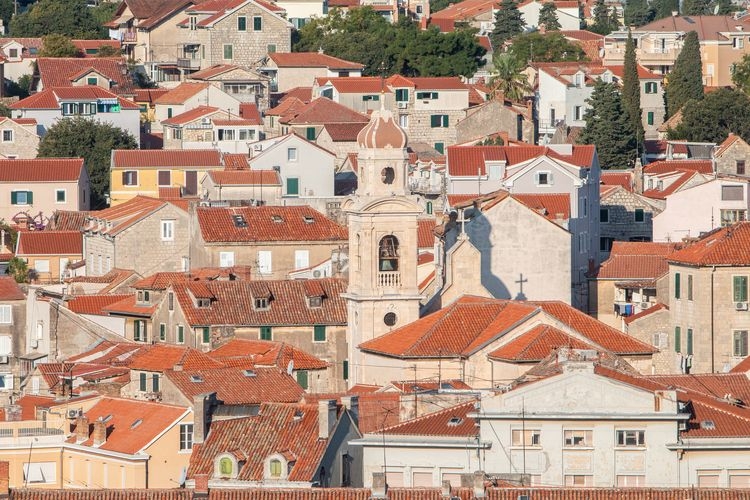
Discover the work of Ivan Meštrović, one of Croatia’s most celebrated sculptors, at the villa and gardens he designed overlooking the Adriatic. The collection includes sculpture, drawings and other works displayed within a setting created as both a family home and artistic space.
The gallery reopened in April 2026 following a major 15-month renovation, making this one of the most notable recent cultural updates in Split. Insider tip: combine the gallery with a walk around Marjan or nearby coastal viewpoints rather than returning directly to the Old Town.
9. Visit the Archaeological Museum in Split
Location / Neighborhood: North of the Old Town Best For: History lovers, archaeology, rainy days Estimated Time Needed: 1–2 hours Cost / Entry: €–€€
Go deeper into Dalmatian history at the Archaeological Museum in Split, one of Croatia’s oldest museums. Its collections span Greek, Roman, early Christian and medieval periods, with many objects connected to the ancient city of Salona and other archaeological sites around Central Dalmatia.
Visiting before a trip to Salona can make the ruins considerably more meaningful by providing context for the inscriptions, sculptures and everyday objects once found there. Insider tip: pair the museum and Salona on different days if you’re particularly interested in Roman history rather than rushing both into a single morning.
10. Experience a Hajduk Split match at Poljud Stadium
Location / Neighborhood: Poljud Best For: Football fans, families, local culture Estimated Time Needed: 2–4 hours Cost / Entry: €€–€€€; match tickets vary
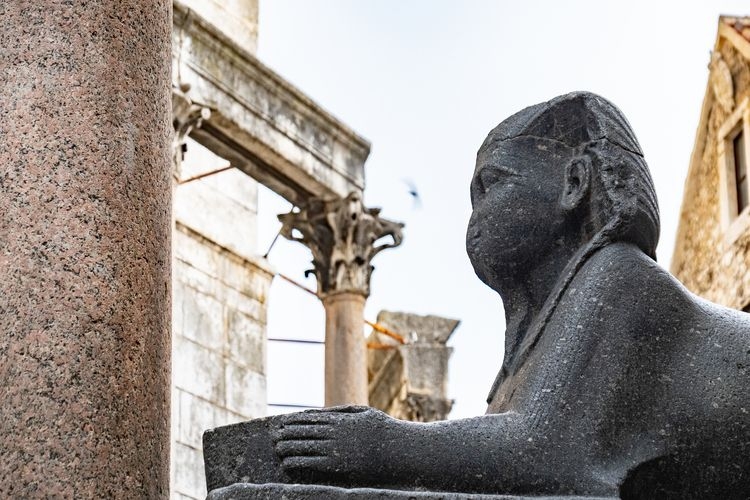
See how deeply football is woven into local identity at Poljud Stadium, home of HNK Hajduk Split. The striking seashell-shaped stadium was built for the 1979 Mediterranean Games and remains one of Split’s major sporting landmarks.
On match days, the atmosphere can be exceptionally energetic as Hajduk supporters fill the stadium and surrounding streets. Insider tip: buy tickets through official channels and arrive early for major fixtures, when traffic and crowds around Poljud increase significantly.
Beaches & Outdoor Things to Do in Split
11. Explore Marjan Forest Park
Location / Neighborhood: Marjan Peninsula Best For: Families, couples, hiking, cycling, views Estimated Time Needed: 2–5 hours Cost / Entry: Free
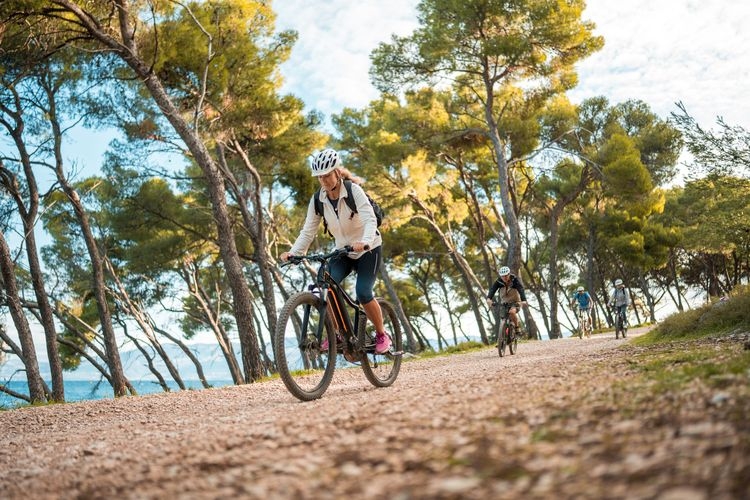
Escape the Old Town without leaving Split at Marjan Forest Park, the pine-covered peninsula rising immediately west of the city centre. Walking and cycling routes pass viewpoints, small historic churches, rocky coastline and shaded woodland, with panoramas across Split and the surrounding islands.
You can also head towards the renovated Sedlo watchtower, set around 148 metres above sea level and offering another elevated perspective over the city and coast when open. Insider tip: start from the Marjan steps near Veli Varoš and climb gradually through the viewpoints rather than trying to reach the highest point as quickly as possible.
12. Swim and watch picigin at Bačvice Beach
Location / Neighborhood: Bačvice Best For: Families, swimming, local culture, beach days Estimated Time Needed: Half day Cost / Entry: Free
Spend a few hours at Bačvice Beach, Split’s best-known urban beach and an unusual sandy option along a coastline better known for pebbles and rocks. Its shallow water is closely associated with picigin, a fast-moving local ball game invented in Split and still played throughout the year.
Bačvice sits within walking distance of the harbour and Old Town, making it particularly convenient when you don’t want to dedicate a full day to the beach. Insider tip: visit in the morning for easier swimming and return later if you want to see the livelier promenade and evening atmosphere.
13. Relax at Kašjuni Beach
Location / Neighborhood: Southern Marjan Best For: Couples, families, swimming, relaxed beach days Estimated Time Needed: Half day Cost / Entry: Free; loungers and refreshments extra
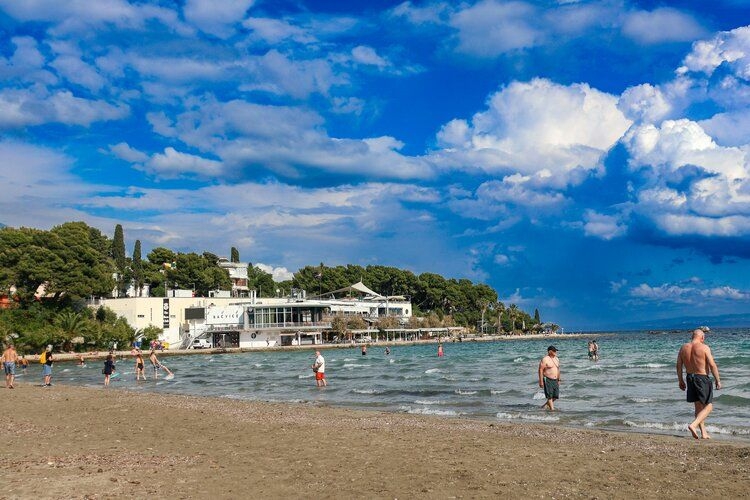
Head around the Marjan Peninsula to Kašjuni Beach, a pebbled bay backed by the green slopes of the forest park. Clear Adriatic water and a more secluded setting give it a distinctly different feel from central Bačvice.
The sheltered bay is popular with families as well as couples looking for a slower afternoon away from the Old Town. Insider tip: take water shoes for the pebbled shoreline and arrive earlier during July and August when the most convenient spaces can fill quickly.
14. Kayak around the Marjan Peninsula
Location / Neighborhood: Marjan coast Best For: Couples, families with older children, adventure Estimated Time Needed: 2–3 hours Cost / Entry: €€–€€€
See Split from sea level on a guided kayaking trip around the Marjan Peninsula. Routes can pass rocky coves, pine-covered slopes and beaches while giving you views back towards the city and surrounding mountains.
Some excursions include time for swimming or snorkeling when sea conditions allow. Insider tip: choose an early-morning or late-afternoon departure in midsummer to avoid the strongest heat, and use a guided experience unless you are already comfortable paddling in open coastal water.
15. Take a sunset sailing trip
Location / Neighborhood: Split Harbour / Adriatic Sea Best For: Couples, groups, celebrations, sunset Estimated Time Needed: 2–4 hours Cost / Entry: €€–€€€
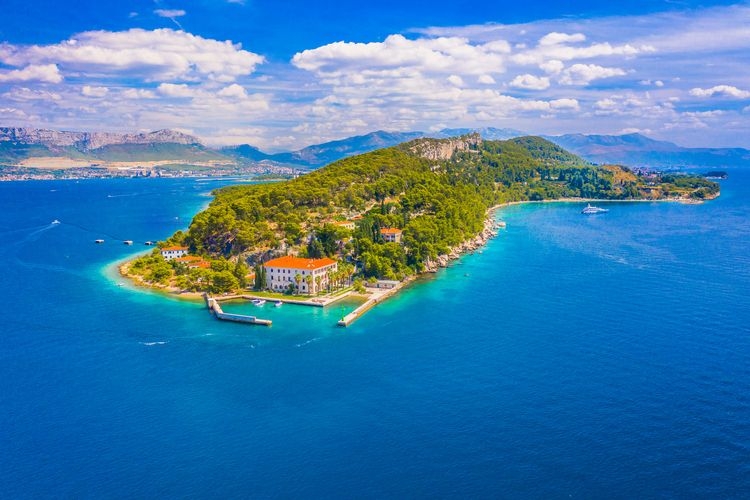
Watch Split recede behind you during a sunset sailing or private boat trip from the harbour. Once offshore, views open across Marjan, the city skyline and nearby islands as the late-afternoon light changes over the Adriatic.
Options range from shared sailing excursions to private charters tailored around couples, families or groups. Insider tip: book a private skipper if you want more flexibility over swimming stops and route, and schedule boat trips early enough in your holiday to allow for rescheduling if winds affect your plans.
16. Cycle around Marjan
Location / Neighborhood: Marjan Forest Park Best For: Active couples, families, cycling Estimated Time Needed: 2–4 hours Cost / Entry: Free with your own bike; rentals extra
Cover more of Marjan’s wooded peninsula by bike, following paved roads and recreational routes away from central Split’s traffic. You can connect viewpoints, small churches and coastal sections while stopping wherever the scenery catches your attention.
It is a particularly useful option if you want to see more than is practical on foot without spending the day in a car. Insider tip: rent your bike near the city centre but head towards Marjan rather than attempting to cycle extensively through Split’s busier urban streets, where dedicated cycling infrastructure is more limited.
Food, Entertainment & Local Things to Do in Split
17. Taste traditional Dalmatian food
Location / Neighborhood: Old Town, Riva and surrounding neighborhoods Best For: Couples, families, food lovers Estimated Time Needed: 2–3 hours Cost / Entry: €€–€€€
Discover Split through Dalmatian cuisine, where fresh seafood, grilled fish, olive oil, local cheeses, cured meats and slow-cooked dishes reflect the wider Mediterranean coast. Traditional konobas sit alongside modern restaurants throughout the Old Town and surrounding waterfront neighborhoods.
Popular dishes to look for include pašticada, black risotto, grilled Adriatic fish and peka, although the latter often needs to be ordered ahead. Insider tip: step a few streets away from the busiest Riva terraces for smaller restaurants and ask what fish or seasonal dish is freshest that day.
18. Take a Split food tour
Location / Neighborhood: Old Town and markets Best For: First-time visitors, couples, food lovers Estimated Time Needed: 3–4 hours Cost / Entry: €€–€€€
Combine sightseeing with several tastings on a guided food tour through Split’s historic centre. Routes often move between traditional markets, small restaurants and specialty food stops while introducing you to Dalmatian ingredients and the stories behind the city’s food culture.
It’s an especially useful activity near the start of your stay because you’ll learn what to order and where you may want to eat again later. Insider tip: arrive hungry and mention dietary requirements when booking rather than waiting until the tour has already started.
19. Sample Croatian wine
Location / Neighborhood: Old Town and Split Riviera Best For: Couples, adult groups, wine lovers Estimated Time Needed: 1.5–3 hours Cost / Entry: €€–€€€
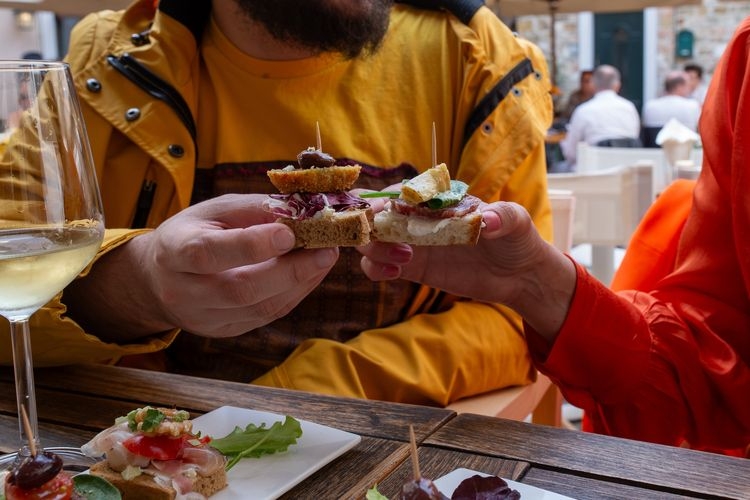
Discover Croatian grape varieties through a wine tasting in Split, where bars and specialist experiences showcase bottles from Dalmatia and other Croatian wine regions. Local varieties can offer something completely different from the internationally familiar grapes you may normally order.
Pair tastings with Dalmatian cheeses, cured meats or small plates for a relaxed evening away from more structured sightseeing. Insider tip: ask specifically for wines made from indigenous Croatian varieties so the experience introduces you to something you’re unlikely to find regularly at home.
20. See a performance at the Croatian National Theatre Split
Location / Neighborhood: Central Split Best For: Couples, culture, opera, ballet, theater Estimated Time Needed: 2–3 hours Cost / Entry: €€–€€€
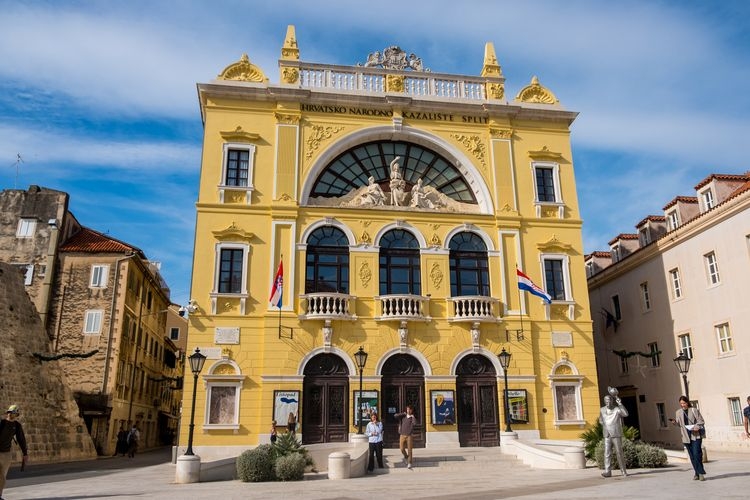
Spend an evening at the Croatian National Theatre Split, an important cultural institution staging drama, opera, ballet and concerts throughout its season. The theatre’s distinctive yellow building stands a short walk from the historic centre and provides a different way to experience Split beyond its Roman heritage.
The 2026/27 season runs through much of the period from autumn into June, while the company is also closely associated with the city’s major summer arts festival. Insider tip: check the program before your trip rather than waiting until arrival, particularly if opera, ballet or a specific production interests you.
Best Day Trips from Split
21. Explore Klis Fortress
Location / Neighborhood: Klis, northeast of Split Best For: Families, history, views, Game of Thrones fans Estimated Time Needed: 2–3 hours Cost / Entry: €€; admission applies
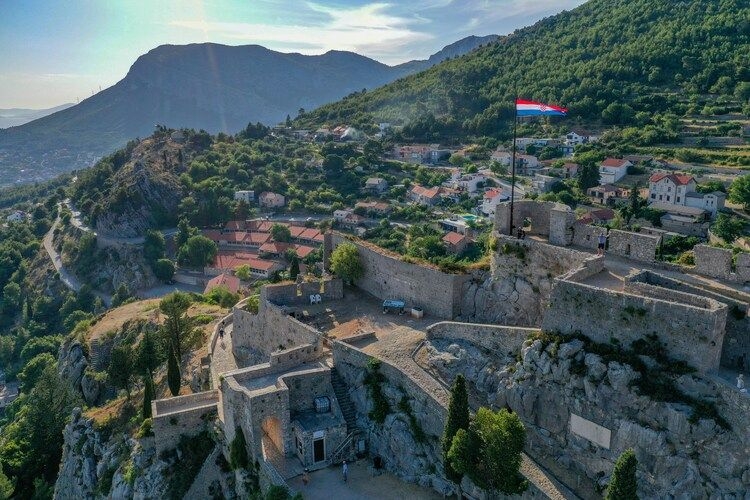
Climb above Split at Klis Fortress, a strategic stronghold that has defended the route between coastal Dalmatia and the interior for centuries. Its elevated walls offer spectacular views across Split, the Adriatic and surrounding mountains.
More recently, the fortress became internationally recognizable as a filming location for Meereen in Game of Thrones, but its real history is considerably older and more dramatic. Insider tip: combine Klis with nearby Salona for a full day linking Roman, medieval and modern Split history.
22. Walk through the ruins of ancient Salona
Location / Neighborhood: Solin Best For: History, archaeology, families Estimated Time Needed: 2–3 hours Cost / Entry: €–€€
Explore the remains of Salona, once the capital of the Roman province of Dalmatia and the largest archaeological park in Croatia. Ruins include sections of defensive walls, an amphitheatre, early Christian sites and remains associated with a city that once supported tens of thousands of inhabitants.
The open layout feels very different from the crowded Diocletian’s Palace and allows you to see the scale of the Roman settlement from which ancient Split emerged. Insider tip: take water and sun protection because much of the site is exposed, particularly during summer afternoons.
23. Spend the day in Trogir
Location / Neighborhood: Trogir, west of Split Best For: Couples, families, history, architecture Estimated Time Needed: Half day to full day Cost / Entry: Free to explore; attractions extra
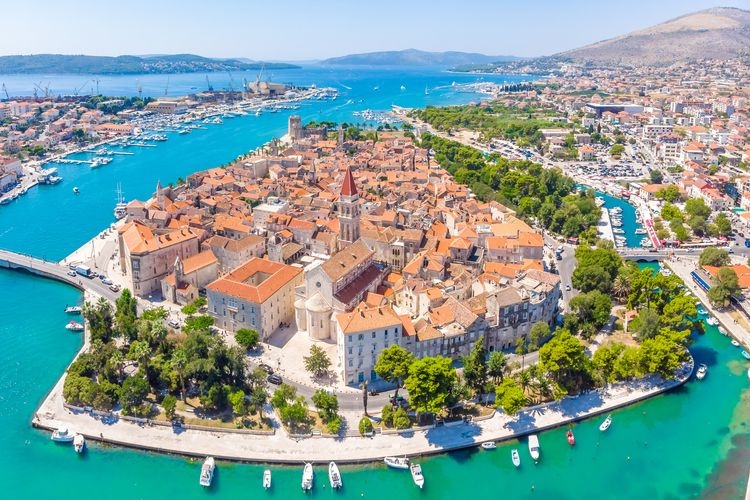
Travel west to Trogir, a compact historic town whose remarkably preserved centre is protected by UNESCO. Narrow stone streets lead between Romanesque and Renaissance buildings, small squares, churches and a waterfront lined with boats and cafés.
Its manageable size makes Trogir an easy half-day excursion from Split, although staying for dinner allows you to experience the Old Town once daytime crowds begin to leave. Insider tip: combine the historic centre with a waterfront walk rather than concentrating only on its cathedral and main square.
24. Go rafting on the Cetina River near Omiš
Location / Neighborhood: Omiš / Cetina Canyon Best For: Families with older children, groups, adventure Estimated Time Needed: Half day Cost / Entry: €€–€€€
Head south to Omiš, where the Cetina River cuts through a dramatic canyon before meeting the Adriatic. Guided rafting trips tackle stretches of river with manageable rapids, calmer pools and forested scenery, providing a refreshing contrast to Split’s city sightseeing.
Omiš itself is worth exploring too, with a historic centre and fortresses reflecting its past as a stronghold of medieval pirates. Insider tip: choose a professionally guided trip matched to the ages and experience of your group, and bring secure footwear that can get wet.
25. Visit Krka National Park
Location / Neighborhood: Šibenik-Knin County Best For: Families, couples, waterfalls, nature Estimated Time Needed: Full day Cost / Entry: €€–€€€; seasonal park admission varies
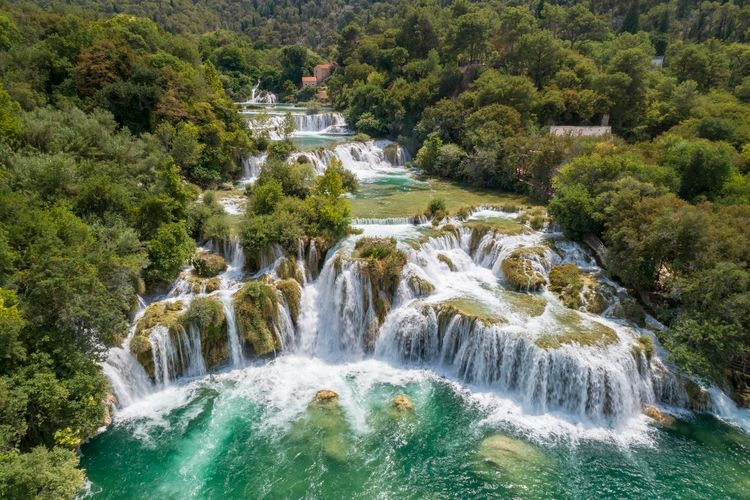
Spend a day among waterfalls, river scenery and historic sites at Krka National Park, one of the most popular natural excursions from Split. The best-known area is Skradinski buk, where a network of paths and boardwalks passes a broad series of cascades and historic watermills.
Other sections include Roški slap, Visovac and archaeological attractions farther upstream, giving repeat visitors plenty beyond the headline waterfall. Insider tip: buy tickets in advance during peak summer periods and allow at least a couple of hours just for Skradinski buk before adding other parts of the park.
26. Take a day trip to Hvar
Location / Neighborhood: Hvar Island Best For: Couples, groups, beaches, history Estimated Time Needed: Full day Cost / Entry: €€–€€€
Catch a fast ferry or join a boat excursion to Hvar, one of Croatia’s best-known Adriatic islands. Hvar Town combines Venetian architecture, a waterfront harbour, restaurants and nightlife beneath the elevated Fortica fortress, while the island beyond the town offers vineyards, coves and historic settlements.
A day trip provides enough time for the main town, but returning visitors may prefer a private boat day focused on swimming around quieter coves. Insider tip: check your return ferry before setting off and don’t assume the final sailing runs late enough for an unplanned evening in Hvar Town.
27. Explore Brač and Zlatni Rat
Location / Neighborhood: Brač Island Best For: Families, couples, beaches, island exploring Estimated Time Needed: Full day Cost / Entry: €€–€€€
Cross from Split to Brač, which can be reached in around 45 minutes on some ferry routes. The island combines traditional stone villages, Mediterranean landscapes and some of Central Dalmatia’s most recognizable coastline.
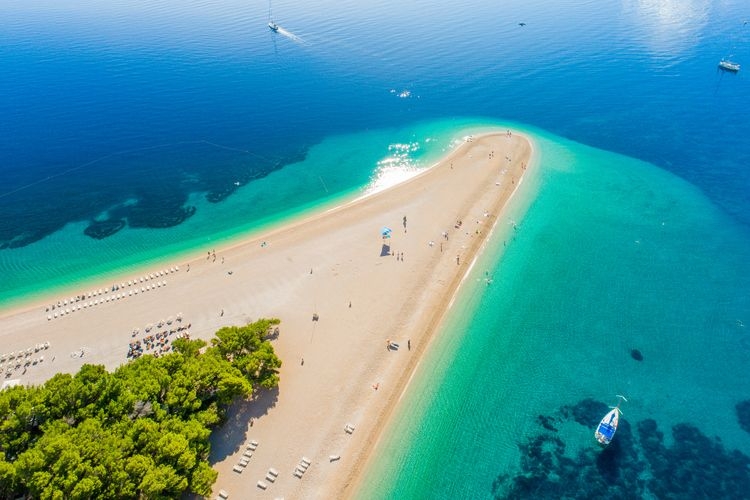
Many visitors head towards Bol and Zlatni Rat, the distinctive pebble beach extending into the Adriatic beneath Vidova Gora. Insider tip: ferrying to Supetar and then travelling overland to Bol takes additional time, so compare ferry and catamaran routes carefully before planning a beach-focused day.
28. Escape to Šolta
Location / Neighborhood: Šolta Island Best For: Couples, families, quieter island days Estimated Time Needed: Full day Cost / Entry: €€–€€€
For a quieter alternative to Hvar and Brač, take the roughly hour-long ferry journey to Šolta. The island is known for olives, wine, honey and small settlements such as Stomorska, Maslinica and Rogač, with sheltered bays providing opportunities for swimming.
Its slower pace makes Šolta particularly appealing if you want your island day to feel relaxing rather than packed with sightseeing. Insider tip: check local bus connections or arrange transport before arrival if you want to explore beyond the ferry port.
29. Take a Blue Cave and Vis boat trip
Location / Neighborhood: Vis and Biševo islands Best For: Couples, groups, boating, swimming Estimated Time Needed: Full day Cost / Entry: €€€
Set out early for a speedboat excursion towards Vis and the Blue Cave on Biševo, one of the longest but most memorable island day trips available from Split. Trips commonly combine the famous sea cave with swimming coves and stops around Vis or other islands.
Because the Blue Cave can only be entered when sea and weather conditions permit, access is never guaranteed. Insider tip: book this experience for an early day in your holiday so you have time to rearrange it if wind or waves prevent the trip from operating.
30. Explore Šibenik
Location / Neighborhood: Šibenik Best For: Couples, families, history, architecture Estimated Time Needed: Full day Cost / Entry: Free to explore; individual attractions extra
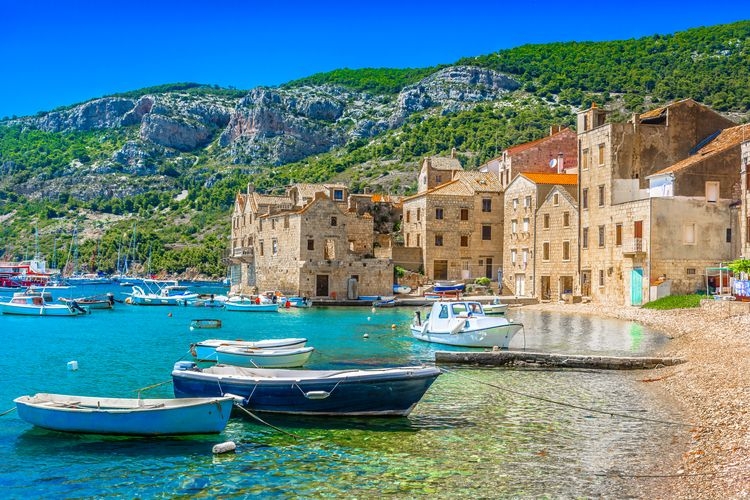
Travel north along the coast to Šibenik, a historic stone city known for medieval streets, fortresses and the UNESCO-listed Cathedral of St James. Its steep lanes climb away from the waterfront towards elevated fortifications with views across the Adriatic.
Šibenik combines particularly well with Krka National Park if you want to see both natural and historic attractions in one long day. Insider tip: if you prefer slower travel, dedicate the day to Šibenik itself rather than squeezing it into a rushed stop after several hours at Krka.
Seasonal Events in Split
Sudamja – Feast of Saint Domnius
Celebrated around May 7, Sudamja is Split’s traditional celebration of its patron saint and one of the best times to experience the city’s local identity. Religious processions are joined by concerts, markets, food events, sporting activities and celebrations around the Riva and Old Town. Insider tip: the main festivities attract large local crowds, so expect changes to traffic and access through the historic centre.
Split Summer Festival
Usually running from mid-July into August, the Split Summer Festival transforms historic locations around the city into stages for opera, drama, ballet, concerts and contemporary performance. Previous programs have used extraordinary settings including the Peristyle and locations around Marjan. Insider tip: reserve performances in the most atmospheric historic venues well ahead during peak summer.
ULTRA Europe
From July 9–11, 2027, ULTRA Europe returns to Split for three nights of electronic music and large-scale stage production. The festival attracts visitors from around the world and is followed by additional Destination ULTRA events on Croatian islands. Insider tip: Split becomes exceptionally busy during festival week, so book your villa, transfers and restaurants well in advance.
Split Marathon
Usually held in February, the Split Marathon takes runners past some of the city’s most recognizable landmarks, including sections around Diocletian’s Palace, the Riva, Poljud and Marjan. Several shorter race distances accompany the marathon. Insider tip: even if you aren’t running, expect road closures and transport changes around the course on race weekend.
Advent in Split
From late November through the Christmas and New Year period, Split adds festive lights, seasonal food, music and entertainment to its squares and waterfront areas. Winter offers a much quieter way to experience the historic centre than the peak summer season. Insider tip: some island services and seasonal attractions operate less frequently in winter, so build your itinerary around the city rather than relying heavily on day trips.
Where to Stay in Split
Stay within Split itself if exploring Diocletian’s Palace, the Riva, markets, restaurants and city beaches on foot is your priority. Central accommodation also makes the ferry terminal particularly convenient for island day trips.
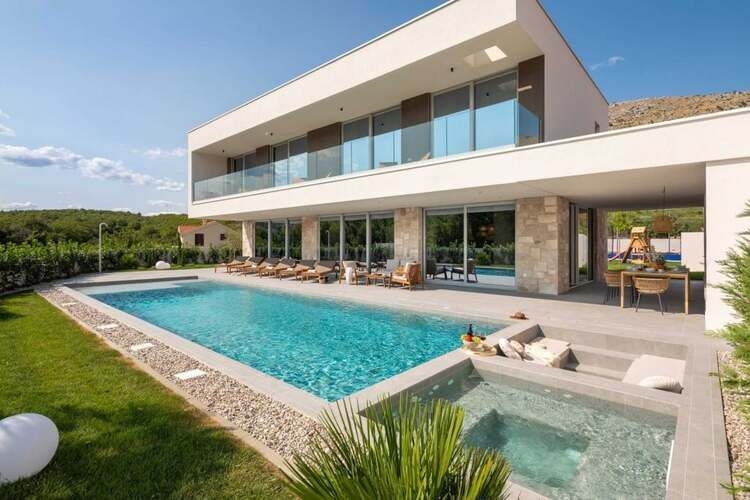
Choose the wider Split Riviera if you want more space, sea views and a relaxing villa environment while keeping the historic centre within driving distance. This works particularly well for families and groups who want to alternate sightseeing days with time beside their own pool.
Areas such as Srinjine and Žrnovnica offer a quieter setting outside the busy centre and can provide larger homes with generous outdoor areas. A private car hire becomes more useful here, particularly if you plan to explore beaches, inland Dalmatia and nearby towns independently.
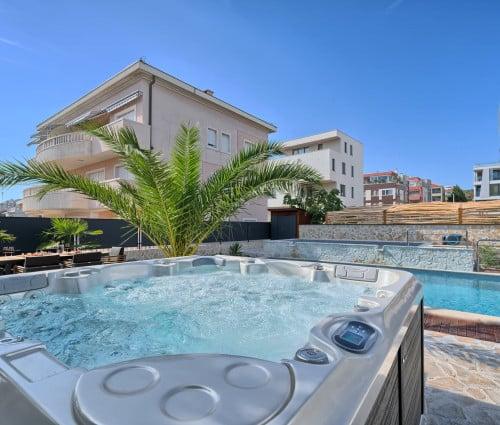
Our Split villas range from one-bedroom stays to substantial villas that can sleep up to 20 guests. Many of our scenic retreats include private pools, sea views, sun terraces, shaded alfresco dining areas and BBQs, while selected villas also feature hot tubs, gardens and family-friendly outdoor spaces.
Plan your Split Trip
Where to stay on the Split Riviera