Best time to visit Sedona
When to go to Sedona for the best weather, crowds and events? The best time to visit Sedona is usually March to May and September to November,

When to go to Sedona for the best weather, crowds and events?
The best time to visit Sedona is usually March to May and September to November, when temperatures are comfortable for hiking, sightseeing, mountain biking, Jeep tours, and exploring the red-rock landscape. These months suit most travelers staying in our Sedona vacation rentals, whether you want an active hiking trip around Cathedral Rock and Devil’s Bridge, a relaxing wellness escape with spas and vortex experiences, or a scenic getaway built around galleries, restaurants, stargazing, and desert sunsets. Spring is especially strong for wildflowers and comfortable trail conditions, while fall combines cooler weather with changing foliage around Oak Creek Canyon.
If you are looking for the cheapest time to visit Sedona or fewer crowds, December to February and parts of July and August can offer better value. Winter brings cold nights but quiet trails and the possibility of snow against the red rocks, while summer is significantly hotter and falls within northern Arizona’s monsoon period. From July through mid-September, thunderstorms can develop quickly and flash flooding is a particular risk around creeks, washes, and canyon areas.
In this guide, we’ll cover:
- The best time to visit Sedona for different travel styles
- Answer common FAQs
- Explain seasonal differences across Sedona and Oak Creek
- Share a month-by-month guide to help you choose the right time to go.



A quick guide to the best months to visit Sedona
What are the best months to visit Sedona overall?
For most travelers, the best months to visit Sedona are March, April, May, September, October, and November. Spring and fall generally offer the best balance of comfortable temperatures, outdoor conditions, scenery, and access to hiking and sightseeing.
When is the best time to visit Sedona for hiking?
The best time to visit Sedona for hiking is usually March to May and September to November. Temperatures are much more comfortable than in midsummer, making longer trails such as Devil’s Bridge, Cathedral Rock, Boynton Canyon, and West Fork easier to enjoy. Spring and fall are also the busiest hiking seasons, so early starts and weekday visits can help avoid the biggest trailhead crowds.

When is the best time to visit Sedona for fewer crowds?
For fewer crowds, December through February is usually the best period, outside of the Christmas and New Year holidays. Summer can also be quieter than spring and fall, although Arizona residents sometimes head to Sedona to escape hotter temperatures farther south.
What is the cheapest time to visit Sedona?
For lower prices, look at winter and midsummer, particularly January, February, July, and August. Accommodation can be more affordable than during the high-demand spring and fall periods, although winter brings colder nights and midsummer requires careful planning around heat and thunderstorms.
When is the best time to visit Sedona for fall foliage?
For fall foliage, mid-October through early November is usually strongest, particularly around Oak Creek Canyon and West Fork, where cottonwoods, oaks, and maples bring gold, orange, and red color to the landscape. October is also one of Sedona’s busiest months, so weekdays are preferable if you want quieter trails.

Is summer too hot to visit Sedona?
Summer can still be enjoyable, but June through August requires a different travel style. Daytime highs regularly reach the 90s°F, so hiking is best planned around sunrise, while swimming at Slide Rock State Park, shaded Oak Creek activities, spas, pool time, galleries, and evening dining become more appealing during the hottest part of the day.
When is the best time to visit Sedona for stargazing?
Sedona is excellent for stargazing year-round and has been designated an International Dark Sky Community. Fall, winter, and spring are particularly comfortable because evenings are cooler and conditions are better suited to spending longer periods outside after dark. Popular viewing areas include Baldwin Trailhead, Aerie Trailhead, Beaverhead Flat Scenic Overlook, and Thunder Mountain Trailhead.

When is monsoon season in Sedona?
Northern Arizona’s monsoon pattern is most noticeable during July, August, and into September. Thunderstorms can form quickly and may bring lightning, heavy rain, and flash flooding, particularly around creeks, washes, and narrow canyon areas. Check local forecasts before hiking during this period and avoid flood-prone areas when storms are nearby.
Does it snow in Sedona?
Yes. Sedona can receive occasional snowfall during winter, although snow in town often melts relatively quickly. Snow-dusted red rocks can create particularly striking scenery, while higher elevations around northern Arizona generally remain colder than central Sedona.
What are the best Sedona events by season?
There's always plenty of things to do in Sedona as well as plenty of annual events to enjoy.
In winter, the Sedona International Film Festival takes place across February and early March. Spring brings arts events and outdoor activities, while Red Dirt Concerts are typically held in May and September. August includes art-gallery evenings and dark-sky events, while October is one of the busiest cultural months, with the Sedona Yoga Festival, Sedona Arts Festival, and Sedona Plein Air Festival.
November brings the Sedona Mountain Bike Festival and Día de los Muertos celebrations, followed by festive December events such as the Tlaquepaque Festival of Lights. Winter is also a scenic time to take a sunrise hot-air-balloon ride over Sedona’s red-rock landscape, with flights available year-round when conditions allow.

The best time to visit Sedona: a month-by-month guide
From quiet winter hikes and spring wildflowers to summer swimming holes, monsoon sunsets, and peak fall color, the best time to visit Sedona depends on what you want from your trip. Sedona sits at roughly 4,500 feet above sea level, giving it more distinct seasons and cooler conditions than lower-desert destinations such as Phoenix.
Sedona in January

January is one of the quietest months to visit Sedona, making it a good choice for peaceful hiking, photography, scenic drives, spas, and wellness-focused trips. Cool daytime temperatures make longer outdoor activities comfortable, while clear winter nights are excellent for stargazing. Occasional snowfall can transform Cathedral Rock, Bell Rock, and the surrounding red-rock formations into dramatic winter landscapes.
Weather in Sedona in January
Cool and mostly sunny, with cold nights and occasional winter rain or snow. Average temperature: 34–58°F (1–15°C) | Chance of average rainfall: Moderate.
Sedona in February

February remains relatively quiet but starts to feel more active as temperatures rise. It is a strong month for hiking, romantic getaways, spas, galleries, and red-rock photography without peak spring crowds. A major cultural highlight is the Sedona International Film Festival, which generally runs from late February into early March and brings screenings, filmmakers, and special events to the city.
Weather in Sedona in February
Cool but gradually warming, with comfortable hiking days and chilly evenings. Average temperature: 36–61°F (2–16°C) | Chance of average rainfall: Moderate.
Sedona in March

March marks the start of one of Sedona’s busiest and most rewarding travel periods. Warmer afternoons create excellent conditions for hiking and mountain biking, while spring vegetation and early wildflowers start adding color to the desert. The Sedona International Film Festival can continue into the beginning of March, and spring-break visitors start arriving later in the month, so popular trailheads are best tackled early.
Weather in Sedona in March
Mild and increasingly spring-like, with comfortable days and cooler mornings and evenings. Average temperature: 40–68°F (4–20°C) | Chance of average rainfall: Moderate.
Sedona in April

April is one of the best times to visit Sedona. Temperatures are ideal for hiking Cathedral Rock, Devil’s Bridge, Boynton Canyon, and other exposed trails, while wildflowers and spring greenery create particularly photogenic scenery. It is also a good month for mountain biking, Jeep tours, art galleries, and longer sightseeing days before summer heat arrives. Demand is high, so planning popular activities and dining reservations ahead is worthwhile.
Weather in Sedona in April
Warm, dry, and very comfortable for hiking and sightseeing. Average temperature: 44–75°F (7–24°C) | Chance of average rainfall: Low.
Sedona in May

May is another standout month and one of the best months to visit Sedona overall. Days are warm but mornings remain comfortable for hiking, mountain biking, and outdoor sightseeing. It is also a good time for golf, Jeep tours, wellness retreats, and sunset dining. Red Dirt Concerts are typically held during May, adding live music to Sedona’s spring events calendar.
Weather in Sedona in May
Warm, sunny, and increasingly dry, with strong conditions for outdoor adventures. Average temperature: 53–84°F (12–29°C) | Chance of average rainfall: Low.
Sedona in June

June is Sedona’s driest month and marks the beginning of true summer heat. It is still rewarding if you start outdoor activities early, with sunrise hikes, morning mountain-bike rides, and scenic drives all good options. Slide Rock State Park and Oak Creek become particularly appealing for cooling off during the afternoon, while evenings work well for outdoor dining and stargazing.
Weather in Sedona in June
Hot, sunny, and exceptionally dry, with strong midday heat. Average temperature: 61–94°F (16–34°C) | Chance of average rainfall: Low.
Sedona in July

July is typically the hottest month in Sedona and also marks the main start of monsoon weather. Early mornings are best for hiking, while afternoons are better suited to swimming holes, pools, spas, galleries, and shaded activities. Thunderstorms can produce dramatic skies and spectacular sunsets, but visitors should take lightning and flash-flood warnings seriously.
Weather in Sedona in July
Very hot with afternoon thunderstorm potential as monsoon conditions develop. Average temperature: 68–97°F (20–36°C) | Chance of average rainfall: Moderate.
Sedona in August

August remains hot and is typically Sedona’s wettest month, but it has its own advantages. The landscape becomes greener after summer rain, storm clouds create dramatic photography conditions, and warm evenings suit restaurants, galleries, and outdoor events. Sedona’s 1st Friday in the Galleries program and summer dark-sky events can add a cultural option beyond daytime hiking.
Weather in Sedona in August
Hot and more humid, with the greatest chance of monsoon showers and thunderstorms. Average temperature: 67–94°F (19–34°C) | Chance of average rainfall: High.
Sedona in September

September is one of the smartest months to visit Sedona. Temperatures begin to ease, monsoon activity usually becomes less persistent, and hiking, Jeep tours, mountain biking, and outdoor dining become more comfortable again. Red Dirt Concerts typically return in September, while Fiesta de Tlaquepaque adds a cultural highlight to the early-fall calendar.
Weather in Sedona in September
Warm but gradually cooling, with lingering storm chances early in the month and increasingly comfortable conditions later on. Average temperature: 61–89°F (16–32°C) | Chance of average rainfall: Moderate.
Sedona in October

October is one of the best times to visit Sedona and one of the busiest. Comfortable temperatures make hiking, biking, Jeep tours, and photography particularly rewarding, while fall foliage begins adding gold and orange to Oak Creek Canyon. October also has one of the strongest event calendars of the year, including the Sedona Yoga Festival, Sedona Arts Festival, Sedona Plein Air Festival, and seasonal family events.
Weather in Sedona in October
Warm and crisp during the day with cooler nights and excellent hiking conditions. Average temperature: 51–79°F (11–26°C) | Chance of average rainfall: Low.
Sedona in November

November is ideal for travelers who want fall scenery with slightly less intensity than October. Cooler temperatures remain excellent for hiking and mountain biking, and early November can still bring striking foliage around Oak Creek. The Sedona Mountain Bike Festival is a major annual draw, while Día de los Muertos celebrations and the Sedona Turkey Trot add further seasonal interest.
Weather in Sedona in November
Cool, dry, and comfortable for active days, with colder evenings as winter approaches. Average temperature: 41–67°F (5–19°C) | Chance of average rainfall: Low.
Sedona in December

December is quiet, atmospheric, and particularly appealing for couples, wellness breaks, and festive desert escapes. Clear winter days are good for hiking and scenic drives, while colder evenings suit fireplaces, hot tubs, and stargazing. Holiday events include seasonal celebrations around Tlaquepaque and family events such as Breakfast with Santa, and occasional snow can create memorable views across the red rocks.
Weather in Sedona in December
Cool and crisp with cold nights, occasional precipitation, and the possibility of snow. Average temperature: 33–58°F (1–14°C) | Chance of average rainfall: Moderate.
Where to stay in Sedona
Best for first-time visitors and walkable sightseeing
Uptown Sedona is a strong base for first-time visitors who want restaurants, cafés, galleries, shops, and tour departures within easy reach. Its central position also works well if you want to combine red-rock sightseeing with a lively town atmosphere rather than spending the entire trip at a secluded desert property.
Best for hiking access, dining, and a convenient all-round base
West Sedona works especially well for travelers focused on hiking, outdoor activities, restaurants, and a more residential atmosphere. It provides convenient access to a number of popular trails while remaining close to grocery stores, cafés, galleries, and everyday amenities.
Best for Bell Rock, golf, and a quieter stay
The Village of Oak Creek is a strong choice if you want a quieter base closer to Bell Rock and Courthouse Butte, with easy access to hiking, golf, and the Red Rock Scenic Byway. It suits families, couples, and outdoor-focused travelers who prefer a more relaxed setting than central Uptown.
Best for nature and a peaceful canyon setting
Oak Creek Canyon is ideal if you want a more nature-focused stay surrounded by forest, creek scenery, and cooler canyon landscapes. It provides a very different feel from central Sedona and works particularly well for travelers who prioritize peace, hiking, and access to Oak Creek.

Stay in our Sedona vacation rentals
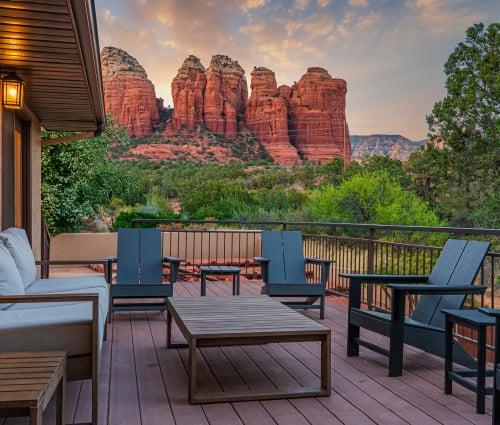
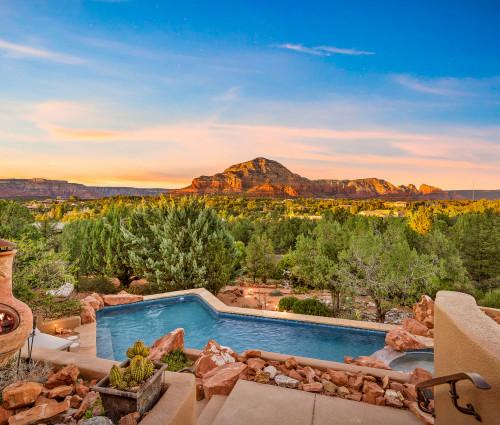
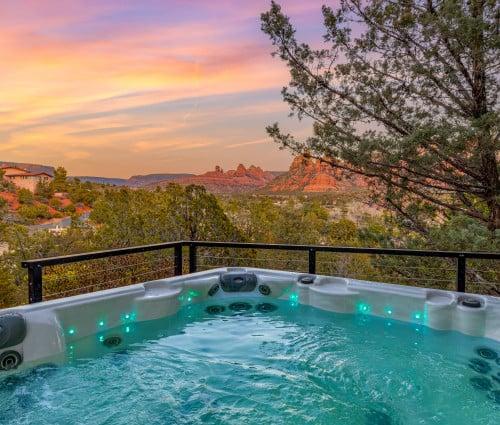
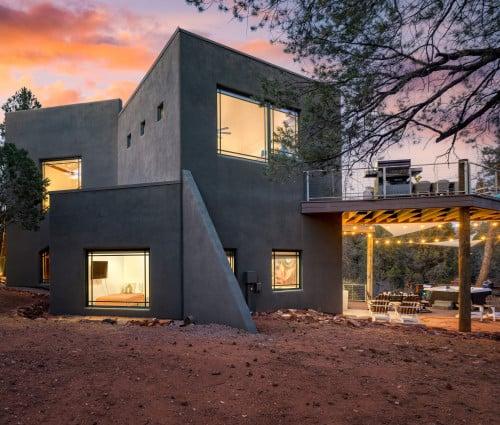
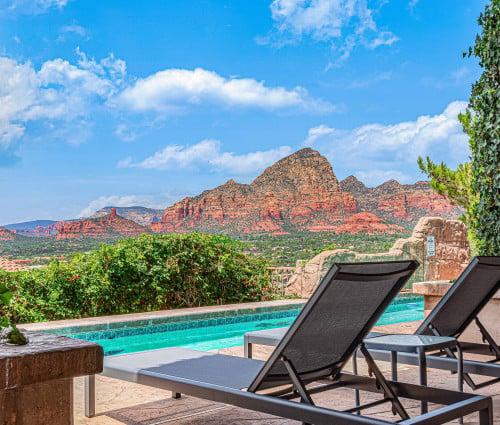
Our award-winning Sedona vacation rentals work especially well if you want a more spacious and private base for a hiking vacation, family getaway, wellness retreat, or group trip. Homes in the area can include private pools, hot tubs, fire pits, outdoor dining areas, and terraces with red-rock views, making it easy to combine active days with relaxed evenings back at your rental. For spring and fall stays, choosing a rental close to your priority hiking area can help reduce driving during Sedona’s busiest periods. The Sedona Trailhead Shuttle also serves several popular trailheads, which can be useful when parking is limited.