
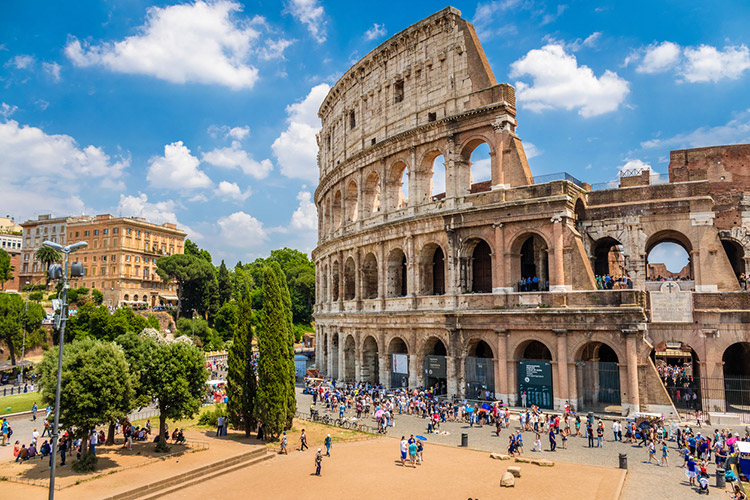
When you think of Europe’s most historic cities, Rome and Athens probably top your list.
It’s a natural guess, but it’s not the full story.
A city’s heritage isn’t just measured by its age. It’s defined by the landmarks you can still walk through, the iconic figures born there, protected global sites, and the historical treasures accessible to everyone online.
To find out which European cities truly pack the biggest historical punch for 2027 travellers, our team at Top Villas put over 100 popular cities to the test. We scored each city across five key heritage factors: founding era, historical landmarks, famous historical figures, UNESCO World Heritage Sites, and digital collections on Google Arts & Culture.
And the results aren’t what you might expect…
Famous heavyweights like Berlin, Barcelona, Amsterdam, and Prague didn’t make the top ten at all. Even Athens – the cradle of Western civilization – only came in at ninth place!
If you’re planning your 2027 travel bucket list around rich history and culture, here is the definitive ranking of Europe’s most historic cities, complete with top sights and travel tips for your next getaway.
Get your history heads on, and let’s dive in!
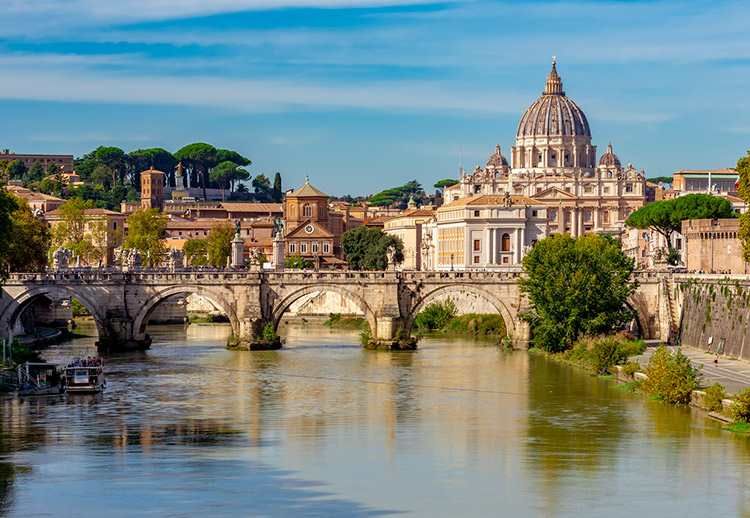
The Most Historic Cities in Europe: Full Rankings
A lower score is better. Each city was ranked on all five criteria, and the five ranks were added together.
Key Findings From Our European Heritage Index
- Rome wins, but only just. Rome took first place, but London was only one point behind it. Paris snagged third place, being behind by 15.
- Italy takes half the top ten. Rome, Milan, Venice, Naples and Florence all make it, and both Milan (4th) and Naples (7th) beat Florence (8th).
- Only the oldest eras make the top ten. Every top-ten city is classified Ancient or Classical. Berlin (11th) is the first Medieval city, 17 points behind Istanbul.
- Popular holiday hotspots finish at the bottom. Santorini (Fira) is last, and Monte Carlo is second last, and neither has a single Tripadvisor-listed historical site. Mykonos Town, Limassol and Interlaken also sit in the bottom six.
- Cambridge beats Oxford on every measure. Cambridge finishes 45th and Oxford joint 72nd, with 37 Tripadvisor historical sites to Oxford’s 11.
- Paris is Europe’s talent factory. Paris has 703 notable people born there, more than double London’s 324. It still only finishes third overall, with one UNESCO site.
- Athens only makes ninth. It scores 58 points, behind Vienna, Naples and Florence as well as Rome, London, Paris, Milan and Venice. Despite its Ancient classification, it ranks just 17th for historical sites.
- Vienna and Istanbul crash the top ten. Vienna is sixth, ahead of Naples and Florence, and Istanbul is tenth with the fourth most historical sites (131) of any city. Berlin, Barcelona, Amsterdam and Prague all miss out.
The Five Most Historic Cities in Europe
#1 Rome, Italy
Rome took first place in the study (shock!) It’s one of 13 cities in the index classified as Ancient, and it has more Tripadvisor historical sites than any other city (345, which is 152 more than second-placed Venice).
Those sites run from the Colosseum and the Roman Forum to the Pantheon and the Trevi Fountain. The city’s famous sons include Julius Caesar and Marcus Aurelius, the emperor who wrote the philosophical Meditations.
Rome is also second for notable people born there (453) and fourth for Google Arts & Culture items (24,211). Its one weak spot is UNESCO. It has a single official listing within the city boundaries, the same as 56 other cities in the index, which is why it only just holds off London overall.
If you’re heading to Rome for its incredible history, time your visit for the first Sunday of the month, when the Colosseum and Roman Forum open free to everyone (you can’t book ahead on those days).
If you’re heading to Rome for its incredible history, browse our villas in Italy for a quieter base once the sightseeing is done.
#2 London, United Kingdom
London finished second, only one point behind Rome, and it’s the only city in the study to hold the outright lead on two measures. It has four individually listed UNESCO World Heritage Sites, more than any other city, and 90,500 items on Google Arts & Culture, the most of any city.
The four are the Tower of London, Westminster, Maritime Greenwich and Kew Gardens. Among the notable people born in the city are Geoffrey Chaucer, who wrote The Canterbury Tales, and Samuel Pepys, whose diary gives an eyewitness account of the Great Fire of London.
It’s also third for both historical sites (182) and notable people born there (324). It dropped points on one thing only: its Classical era classification, which ranks behind the Ancient cities on that measure. The capital’s official visitor guide lists landmarks from Westminster Abbey to St Paul’s Cathedral, and that’s before you reach the museums.
The permanent collection at the British Museum is free to enter every day!
For a city break with space to spread out, our villas in the United Kingdom include London homes.
#3 Paris, France
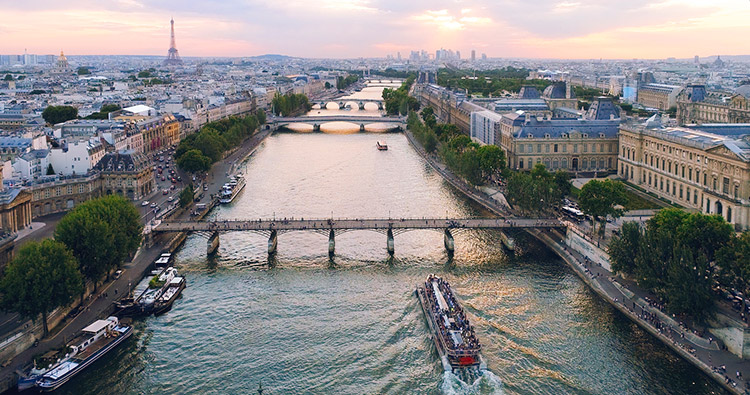
Paris finished third, 15 points behind London. What it lacks in UNESCO sites (one listing) and era classification (Classical), it makes up for in people. Paris has 703 notable people born there, the most of any city in the study.
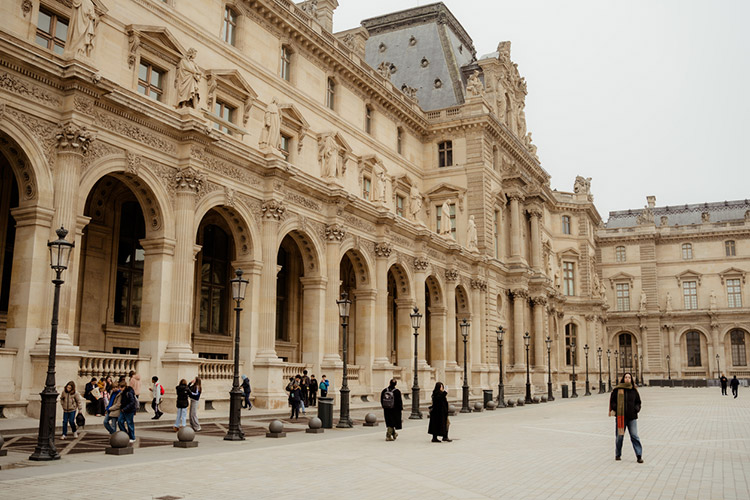
They include Voltaire, the Enlightenment writer who spent his career challenging kings and clergy, and Molière, the playwright whose comedies are still performed today. The city they came from is home to the Louvre, Notre-Dame and Sainte-Chapelle, with the Eiffel Tower on the skyline. For the story of Paris itself, the Musée Carnavalet is worth a stop, and its permanent collections are free.
It’s also second for Google Arts & Culture items (67,636) and seventh for Tripadvisor historical sites (103). If you’re planning a Paris trip, our villas in France are a good place to start.
#4 Milan, Italy
Milan is one of the study’s biggest surprises in the top five. It finished fourth, three points ahead of Venice and sixteen ahead of Florence, and it’s classified Ancient, one of only five cities in the top ten to be placed in that era.
Most visitors know it for the Duomo, its huge Gothic cathedral, and La Scala opera house. It’s also home to Leonardo da Vinci’s The Last Supper, painted on the wall of the Santa Maria delle Grazie convent, and Caravaggio, the revolutionary 16th-century Baroque painter, is among those born here.
It has 114 historical sites on Tripadvisor (sixth) and 22,643 items on Google Arts & Culture (fifth). The weaker area is notable births, where its 96 people rank it 14th.
#5 Venice, Italy
Venice finished fifth, three points behind Milan. Its 193 Tripadvisor historical sites rank second in the whole study, behind only Rome, and its 208 notable people born there rank sixth.
The landmarks include St Mark’s Basilica, the Doge’s Palace and the Rialto Bridge over the Grand Canal. Those born here include Antonio Vivaldi, who composed The Four Seasons, and Canaletto, who made his name painting views of the city.
A Google Arts & Culture total of 11,566 items places it seventh on that measure. It has one UNESCO listing and a Classical era classification.
The rest of the top ten: Vienna (47), Naples (51), Florence (55), Athens (58) and Istanbul (59).
Which European City Has the Most Historical Sites?
Rome has the most historical sites of any European city in our study, with 345 listed on Tripadvisor. The top five:
- Rome: 345
- Venice: 193
- London: 182
- Istanbul: 131
- Naples: 128
The surprise is Istanbul. The city straddles Europe and Asia, and in fourth place it’s the only city in the top five outside Italy and the UK. Its 131 sites outnumber those of Milan (114), Paris (103) and Florence (84), and they range from the Byzantine Hagia Sophia and Basilica Cistern to the Ottoman Topkapı Palace and Blue Mosque.
Naples (128) also outranks Milan, Paris and Florence on this measure. Paris, which finished third overall, is only seventh here. Florence, so often thought of as Italy’s great city of history, is tenth.
Want to explore beyond the big three? Browse our villas in Italy.
Which European City Has Produced the Most Notable People?
Paris has produced more notable historical figures than any other European city we studied. This measure counts notable people born in each city, up to those born in 1900. The top five:
- Paris: 703
- Rome: 453
- London: 324
- Vienna: 282
- Berlin: 242
Paris’ list is impressive. From Voltaire to Claude Monet and Auguste Rodin, the volume of notable figures born in the French capital are among some of the most recognisable in the world.
Vienna is the standout after the big three. Its 282 notable people helped lift it to sixth overall in the Index ahead of Naples and Florence. The list includes the composer Franz Schubert and Marie Antoinette, who was born in the city before becoming Queen of France. Berlin’s list includes the explorer and naturalist Alexander von Humboldt.
It’s a count of birthplaces, not of people who studied or worked in a city. That helps explain why Oxford, with eight, ranks lower than you might expect.
Paris isn’t the only French city worth a long stay. Our villas in France span the country.
Which European Cities Have the Most UNESCO World Heritage Sites?
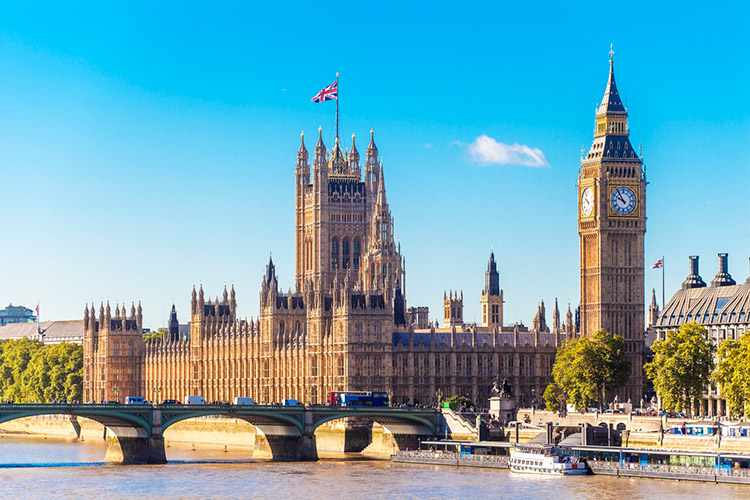
London has the most UNESCO World Heritage Sites of any city in the study, with four. The top of the table:
- London: 4
- (joint) Brussels: 3
- (joint) Antwerp: 3
- (joint) Utrecht: 3
- (joint) Eight cities on two sites each: Vienna, Berlin, Lisbon, Barcelona, Cologne, Bath, Toulouse and Helsinki
It’s the measure where the big-name Italian cities slip. Rome, Florence, Venice, Milan and Naples have one listing each. Meanwhile, 43 of the 112 cities have none, including Dublin, Munich and Copenhagen.
Of the eight UK cities in the study, only London and Bath have more than one. Bath’s two listings are the city itself, known for its Roman baths and Georgian terraces, and the Great Spa Towns of Europe, a group of spa towns across seven countries.
Brussels’ three include the Grand-Place, the guildhall-lined square at its centre.
For trip planning, a UNESCO listing is a handy shortcut. These are places the world has agreed are worth protecting, and many can be visited.
Looking for a UK base? See our villas in the United Kingdom.
Which European Cities Are Most Visible on Google Arts & Culture?
London, Paris and Berlin hold the most items on Google Arts & Culture, the platform where partner institutions publish digitised collections online. It began life as the Google Art Project, with a small group of major museums. The top five:
- London: 90,500
- Paris: 67,636
- Berlin: 56,282
- Rome: 24,211
- Milan: 22,643
Berlin is the leading story here. It ranks third on this measure, with more than double Rome’s total, yet it finishes 11th overall. Munich (22,627) sits just behind Milan and has almost twice as many items as Venice (11,566), but finishes 36th.
At the other end, the totals thin out fast. York has 108 items despite having 45 historical sites on Tripadvisor, and Andorra la Vella has just one. This measure reflects which institutions have digitised their collections, not how much history a city holds, so it works best alongside the other four.
It’s still a handy way to preview a city’s collections before you travel!
Europe’s Ancient Cities: How Do They Rank?
Thirteen of the 112 cities are classified Ancient in our scoring system, and five of them make the top ten. The five highest-ranked Ancient cities:
- Rome: 1st overall
- Milan: 4th overall
- Naples: 7th overall
- Athens: 9th overall
- Istanbul: 10th overall
The other eight are Bologna (12th), Lisbon (13th), Seville (joint 18th), Marseille (35th), Sofia (48th), Avignon (67th), Málaga (74th) and Ibiza Town (joint 81st).
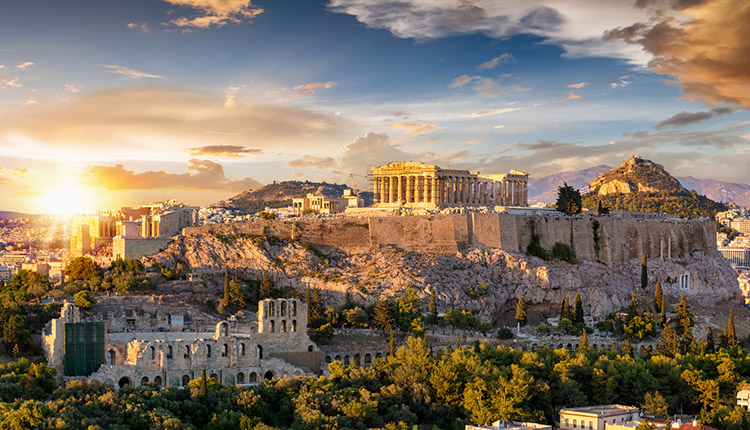
The group comes with plenty of stories. Athens is home to the Parthenon, Istanbul was once known as Constantinople, and Naples sits in the shadow of Vesuvius, close to the ruins of Pompeii. Bologna is home to the University of Bologna, widely described as the oldest university in the world, and the covered arcades that line its streets are UNESCO-listed. Málaga is the birthplace of Picasso.
Being classified Ancient doesn’t guarantee a high finish. Málaga and Ibiza Town sit in the bottom half because they score low on historical sites and notable births. At the other end, the three lowest places (110th to 112th) belong to Tirana, Monte Carlo and Santorini (Fira), all classified Early Modern & Modern.
Seville, Lisbon and Málaga all make good bases for a longer stay. Take a look at our villas in Spain and villas in Portugal.
How Do Britain’s Historic Cities Compare?
London is the UK’s most historic city by some distance, ranked second in Europe. Eight UK cities are in the index:
- London: 2nd (22)
- Edinburgh: joint 22nd (136)
- Bath: joint 27th (150)
- Cambridge: 45th (196)
- Liverpool: 63rd (245)
- Manchester: 64th (247)
- York: 70th (271)
- Oxford: joint 72nd (287)
Bath (150) finishes ahead of Porto (160) and Kraków (172), and has two UNESCO sites. Liverpool beats Manchester by just two points. Cambridge finishes 27 places ahead of Oxford.
Each has its own claim to fame. Bath is built around its Roman baths, Edinburgh’s castle sits on an extinct volcano, and York Minster is one of the largest medieval cathedrals in northern Europe. Cambridge has King’s College Chapel and Oxford has the Bodleian Library.
Split, Dubrovnik or Zagreb? Croatia’s Historic Cities
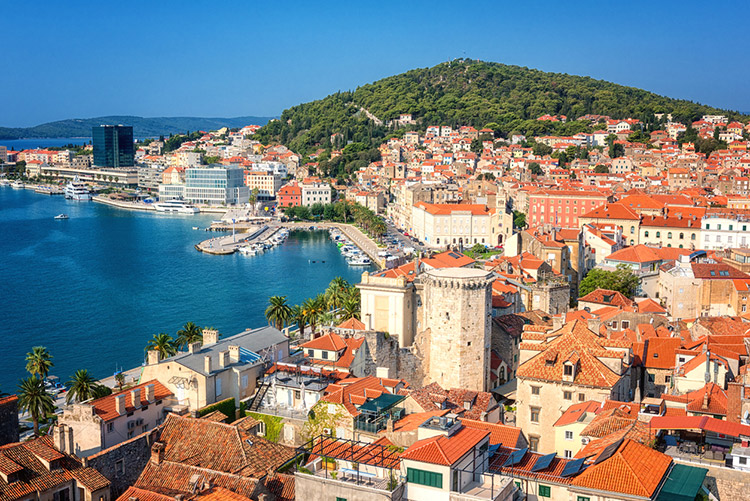
Split is the most historic of the three Croatian cities in our index, ranking 42nd. Dubrovnik is joint 72nd and Zagreb 90th.
Split is classified Classical, while Dubrovnik is classed Medieval. Split also has more historical sites on Tripadvisor (24 against 16) and more Google Arts & Culture items (1,750 against 336). Zagreb has only six historical sites.
Split’s centrepiece is Diocletian’s Palace, built as a retirement home for a Roman emperor, and people still live and work within its walls. Dubrovnik is known for its city walls, and for standing in for King’s Landing in Game of Thrones.
Planning a Croatian summer? Browse our villas in Croatia.
Where Do Europe’s Holiday Hotspots Rank?
Several of Europe’s best-known holiday spots rank in the bottom half of the index.
- Cannes: 87th
- Capri: 98th
- Limassol: 108th
- Mykonos Town: 109th
- Monte Carlo: 111th
- Santorini (Fira): 112th
- Ibiza Town: joint 81st
The index scores each city on its own, not the wider region. Santorini (Fira) and Mykonos Town are measured at town level, so this isn’t a verdict on the islands as a whole. Nine cities in the study have no recorded notable person born there, and they include Capri, Ibiza Town, Limassol, Mykonos Town and Sintra.
But the history is often a short trip away. Santorini’s Akrotiri is a Bronze Age settlement buried by a volcanic eruption, and Delos, an ancient sacred island and UNESCO site, is a boat ride from Mykonos. Capri was a retreat for the Roman emperor Tiberius, and Ibiza Town’s fortified old town, Dalt Vila, is a UNESCO site.
It does show how the two kinds of trip differ. Some places are best for history, others for sun and sea, and many of the best villa destinations sit in the second group.
See our villas in Greece for a stay on the islands.
FAQs About the Most Historic Cities in Europe
What is the most historic city in Europe?
According to our 2026 study, Rome is the most historic city in Europe. London was a close second, only one point behind, followed by Paris, a further 15 points back. Rome has the most Tripadvisor historical sites (345) and is classified Ancient.
Is London or Paris more historic?
London ranks higher than Paris in our index, finishing second against Paris’s third place, 15 points behind. London has more UNESCO World Heritage Sites (4 against 1) and more Google Arts & Culture items (90,500 against 67,636). Paris leads on notable people born there, with 703 against London’s 324.
Which European city has the most UNESCO World Heritage Sites?
London has the most UNESCO World Heritage Sites of any city in our study, with four. Brussels, Antwerp and Utrecht follow with three each.
Which is the most historic city in the UK?
London is the most historic UK city in our index and the second most historic in Europe. Edinburgh is next (joint 22nd), then Bath (joint 27th) and Cambridge (45th).
How did you decide which city is the most historic?
We scored 112 European cities on five criteria: era classification, Tripadvisor historical sites, notable people born there, UNESCO World Heritage Sites and Google Arts & Culture items. Each city was ranked on every criterion and the ranks were added together. The lowest total wins.
Which historic European cities can you combine with a villa holiday?
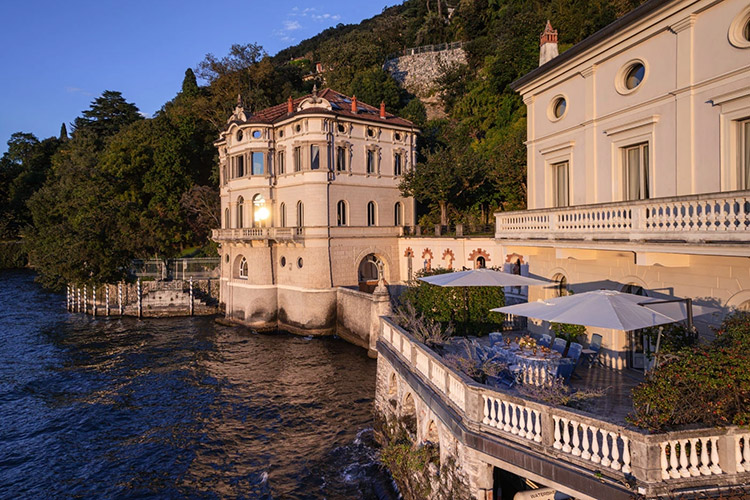
Many of the top-ranked cities sit close to popular villa regions. Milan pairs with Lake Como, Florence and Pisa with Tuscany, and Naples with the Amalfi Coast. Split is a gateway to the Dalmatian Coast.
Planning a Historic European Villa Holiday
The best history trips tend to combine a few days of sightseeing with somewhere quiet to come back to. That’s where a villa comes in. You get space, a kitchen and a pool, and you can set your own pace instead of queuing at breakfast.
Italy is the obvious place to start, with five cities in the top ten. Our villas in Italy cover Tuscany, Lake Como and beyond. For a change of scene, our villas in Croatia put you on the Adriatic coast, within reach of Split and Dubrovnik.
If you’d like to follow the history itself, the Council of Europe’s Cultural Routes map out themed journeys across the continent, and Europa Nostra tracks the heritage sites most at risk. Pair either with a villa base and you’ve got a trip that’s about more than the ticket queue.
Methodology
We analysed 112 European cities to find the most historic. Each city was scored on five criteria:
- Founding era: each city was placed in one of four eras (Ancient, Classical, Medieval, or Early Modern & Modern) based on its most frequently cited founding date, then scored from 1 (Ancient) to 4 (Early Modern & Modern). We used the era, not a date, to avoid the disputes around founding years.
- Tripadvisor historical sites: the number of “historical sites” listed for each city on Tripadvisor, as a measure of how much visible history there is to see.
- Notable people born there: the number of notable historical figures born in each city, up to those born in 1900, as a measure of a city’s cultural influence.
- UNESCO World Heritage Sites: the number of UNESCO World Heritage Sites located within the city itself and no more than 10 km from the city centre, as a measure of internationally recognised heritage. Sites further out were not counted.
- Google Arts & Culture items: the number of items indexed for each city on Google Arts & Culture, as a measure of how well its heritage is documented online.
All metrics were combined into a composite score. Each city was ranked on every criterion, with tied cities sharing a rank, and the five ranks were added together. The lowest total ranks highest. Data is correct as of October 2026.


